Author: Brad Sauve

  • 2017 International Distinguished Badge Recipients

    2017 International Distinguished Badge Recipients

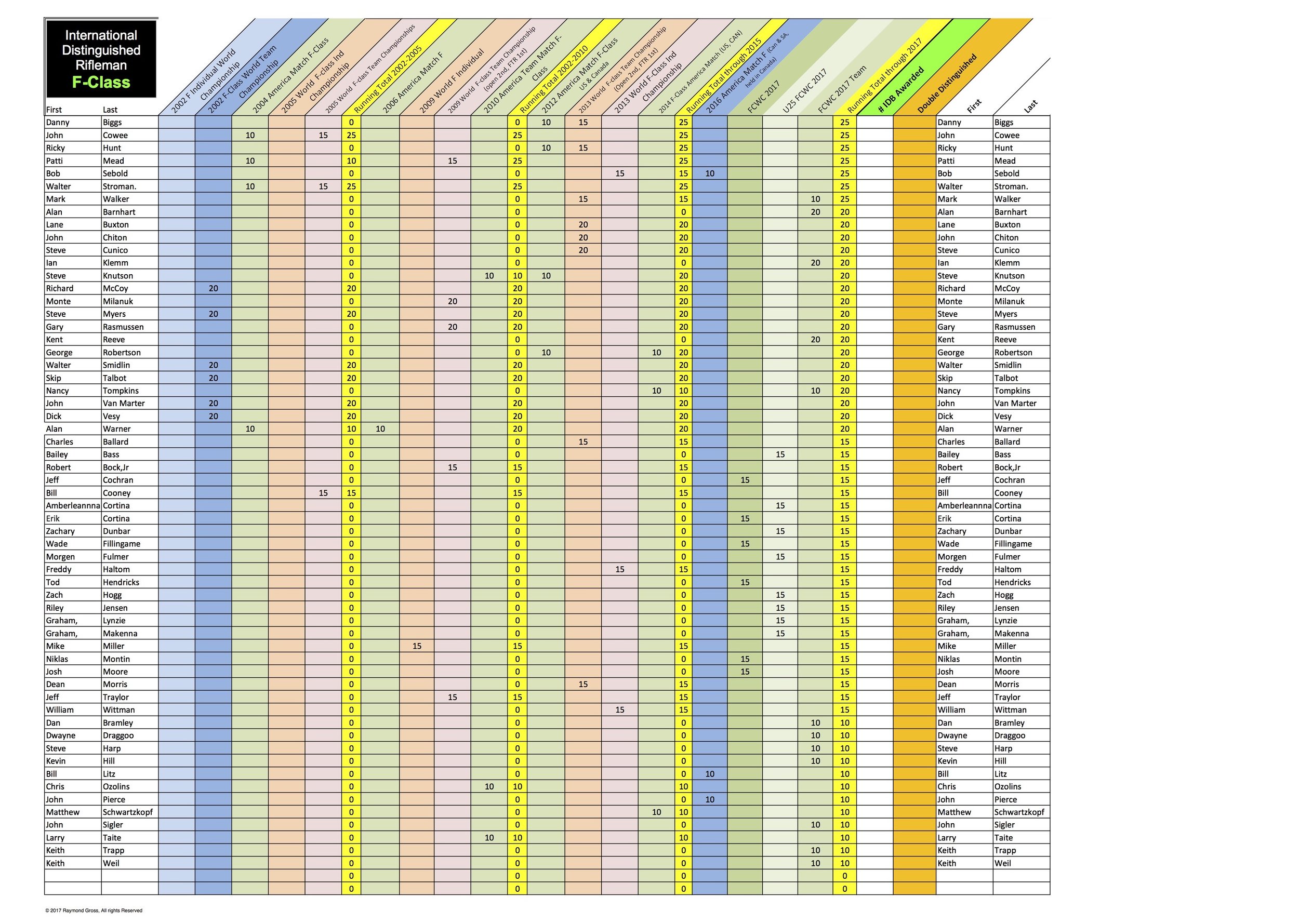
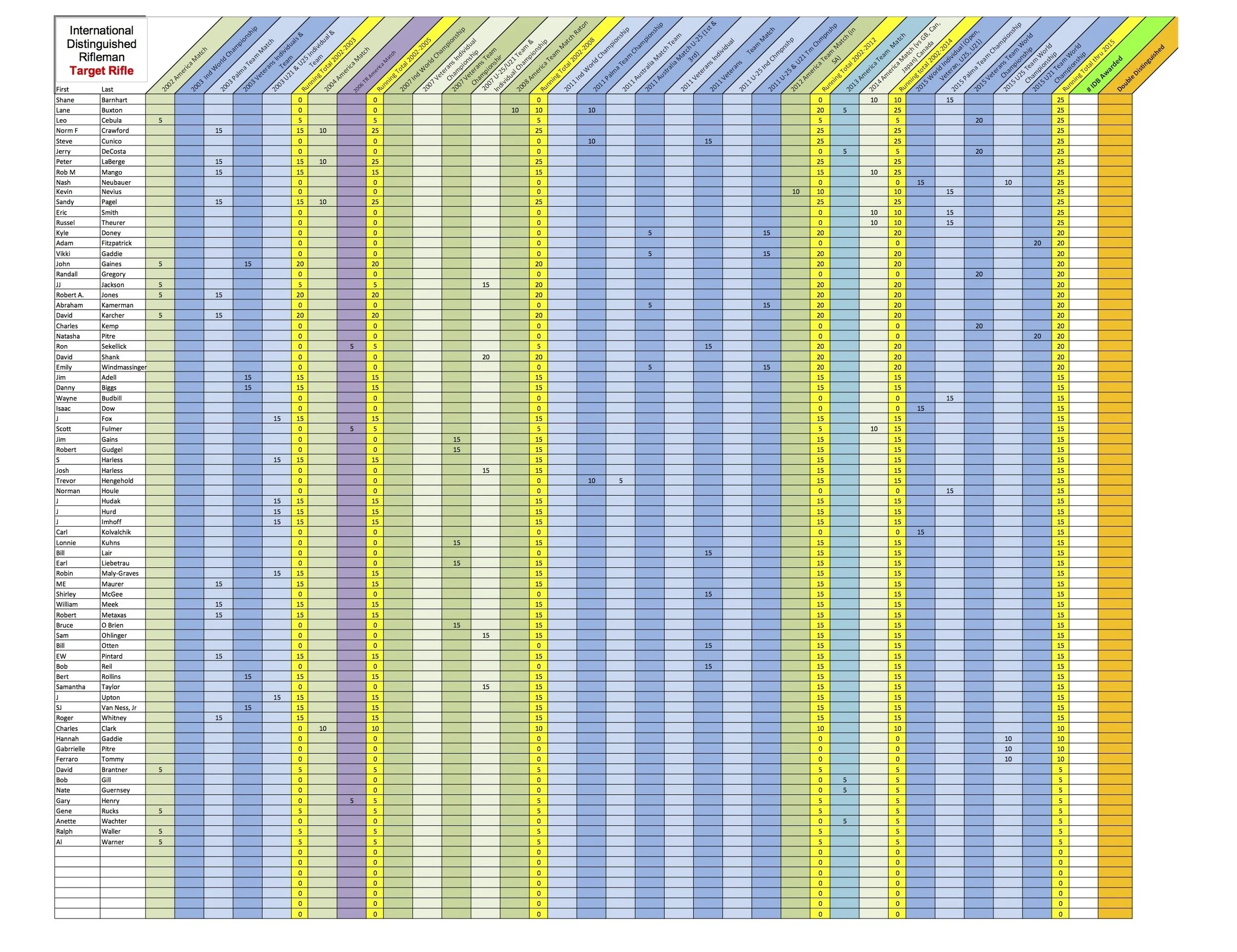
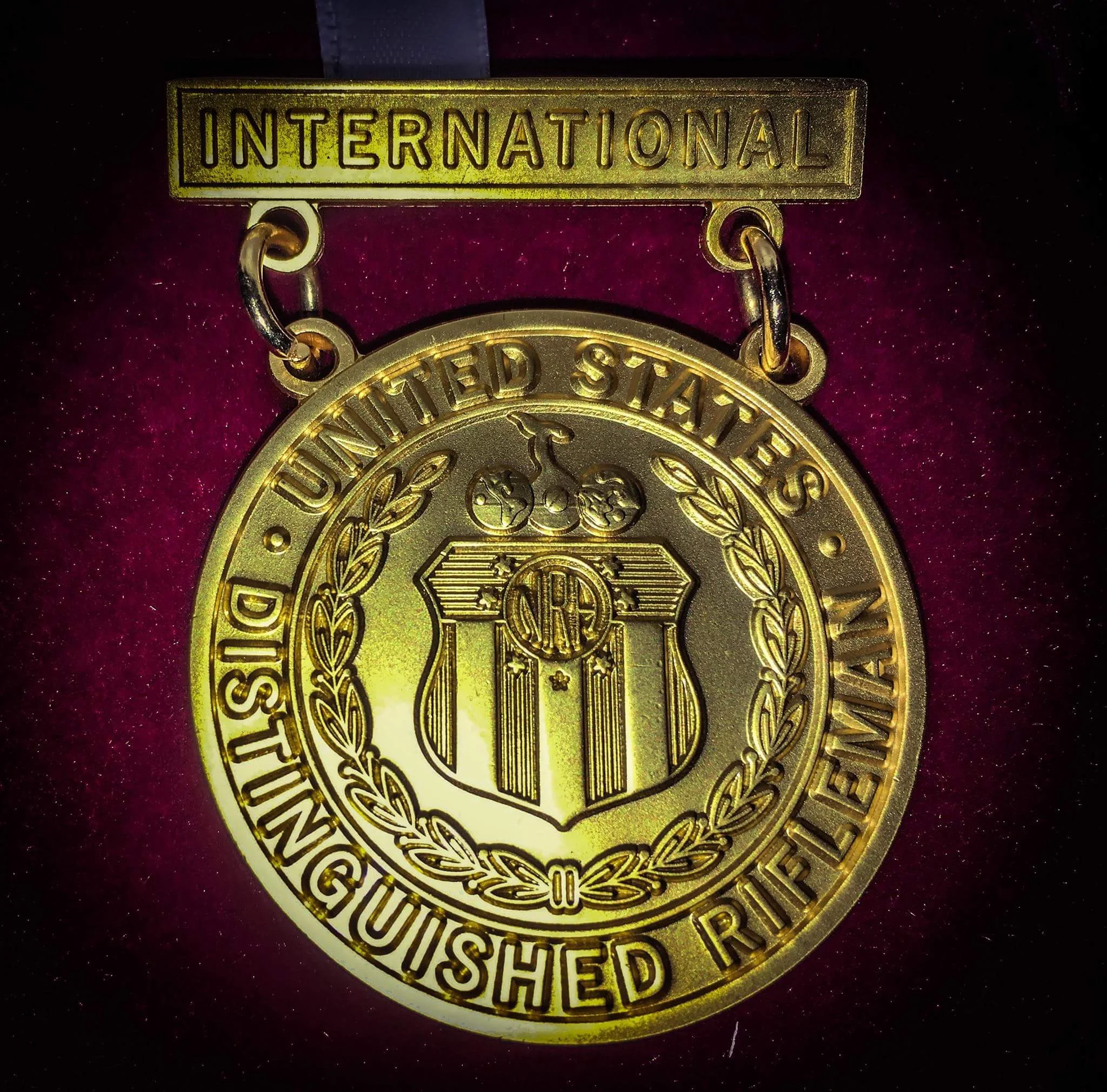
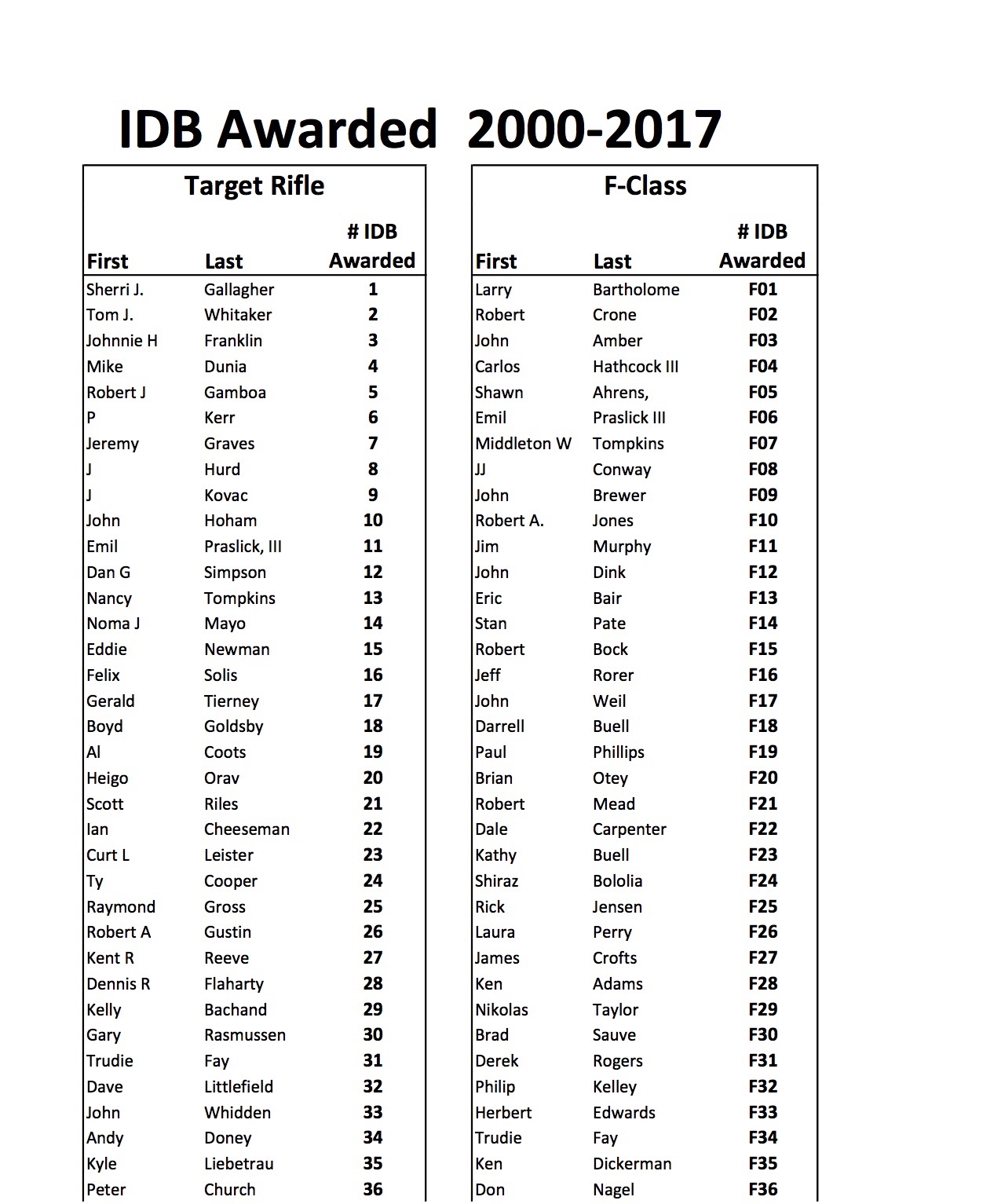
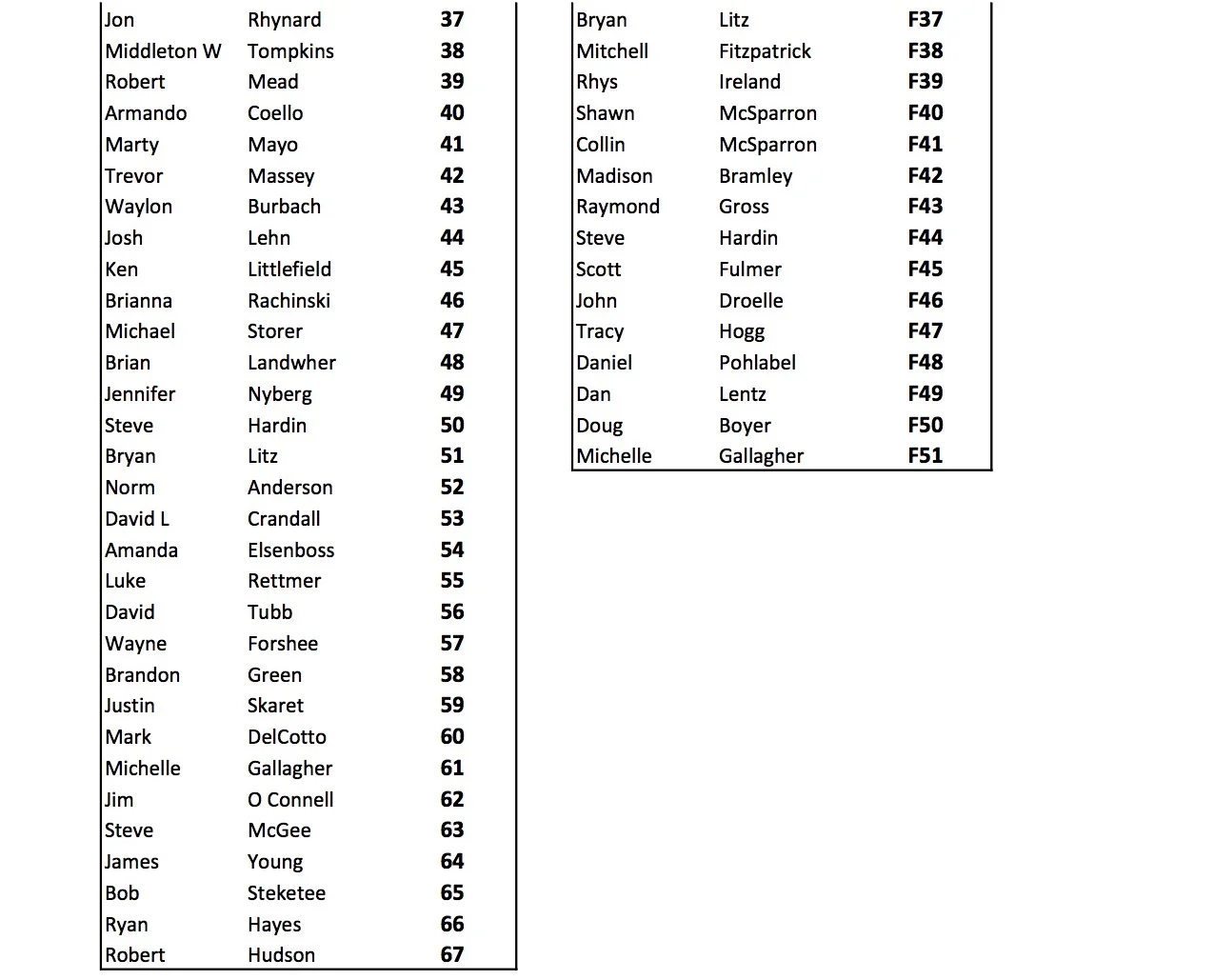
    As we all anxiously await the NRA sending out the International Distinguished Badges, we have fifteen new recipients this year, who have earned their badges at the F-Class world Championships at Connaught Range in Canada. Four of the new recipients are now double International Distinguished, having earned their first badge in Target Rifle.

    The new recipients are:

    Bryan Litz                                   (Double)

    Mitchell Fitzpatrick

    Rhys Ireland

    Shawn McSparron

    Collin McSparron

    Madison Bramley

    Raymond Gross                       (Double)

    Steve Hardin                             (Double)

    Scott Fulmer

    John Droelle

    Tracy Hogg

    Daniel Pohlabel

    Dan Lentz

    Doug Boyer

    Michelle Gallagher                 (Double)


    Well done and Congratulations All!!! Listings of all the badge recipients and accumulated point totals for those who are working toward a badge, are included below.
     Click  HERE  for PDF version
    Click HERE for PDF version
     Click  HERE  for PDF version
    Click HERE for PDF version
     Click  HERE  for PDF version
    Click HERE for PDF version

    The NRA is in possession of the numbered badges. When we first received the badges from the manufacturer they were supposed to be individually numbered, but they were not.  The badges were sent back for numbering and during that time period the manufacturer went bankrupt. Eventually everything was sorted out and the badges were numbered and returned.

    When they will be sent out is unknown. NRA Competitions is reorganizing and there are many personnel changes. Hopefully when things settle down, the badges will be sent out so that everyone gets their proper number. Keep your fingers crossed.

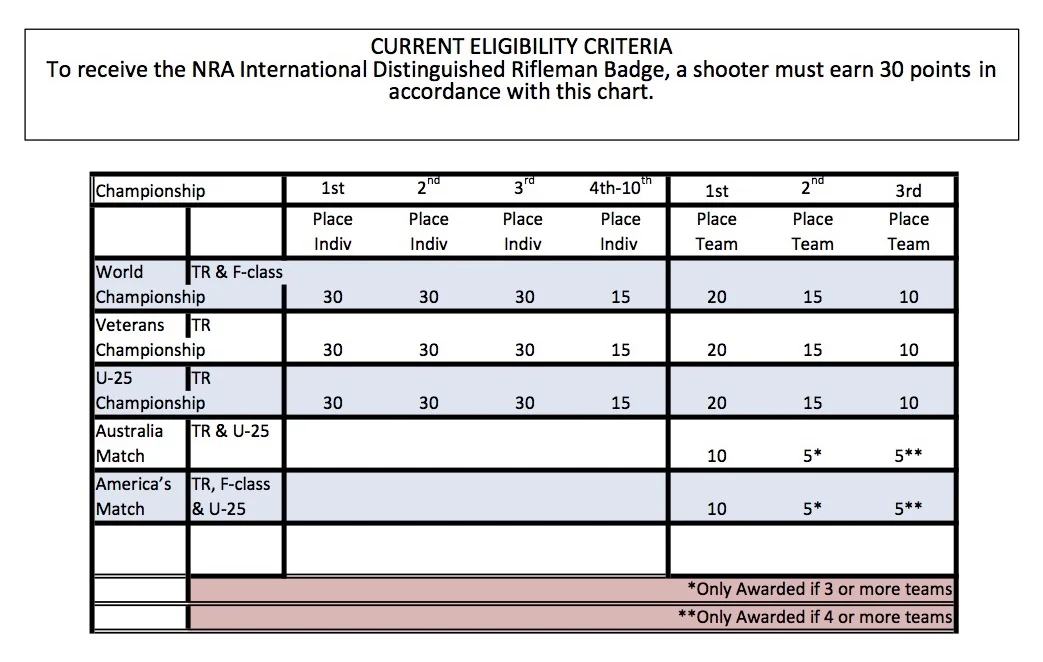
    The International Distinguished Badge is continuation of a program that fell by the wayside in the late 1960’s. The rules that are used to award points for the new badge are closely based on the original rules. Points are earned by competing in sanctioned international matches.  The amount of points earned from each event is based on the event’s prestige or status.  More points are earned at a World Championship than at an America Match, for example.  The point chart is below.
     Click  HERE  for PDF version
    Click HERE for PDF version

    The aspect of ‘Sanctioned Matches’ is often misunderstood. Oftentimes teams and/ or individuals from more than one country will compete in an event. That does not make it an international event. The Berger Southwest Nationals draws people from several countries. The event itself is sanctioned by the US NRA.  It is a ‘National’ level event, but it is not an ‘International’ event.

    International events are sanctioned by the International Council of Fullbore Rifle Associations (ICFRA). In addition to ICFRA sanctioning, for a ‘Team’ World Championship to occur, a minimum of four countries must compete (and each country can only enter a single team).

    The America Match is not yet an ICFRA sanctioned match. It is included in the IDB program because it is an event that happens by an agreement between the US NRA and the DCRA.  It also often draws teams from several additional countries.  In Target Rifle, the America Match is very tightly contested. The US has only won three of the eight America Matches that have been run. The F-Class America Match is beginning to gain the same international draw.  

    There also seems to be some confusion regarding the status of the Rutland Match. Per ICFRA rules it is not a ‘World Championship’. It is a match conceived to allow those shooters who are not on a national team, a chance to shoot alongside the World Championship Team events at the F-Class World Championships. There is work being done to elevate the Rutland to ‘World Championship’ status, but for now, it is not. If it does attain that status, it will fall under the other requirements to a world championship team event, e.g. at least four countries competing and only one sanctioned team per country.

    No ICFRA rules or format have been established for an F-Class U25 Team event at this time. That is also being worked on and sanctioning rules will likely be in place for the next World Championships. 
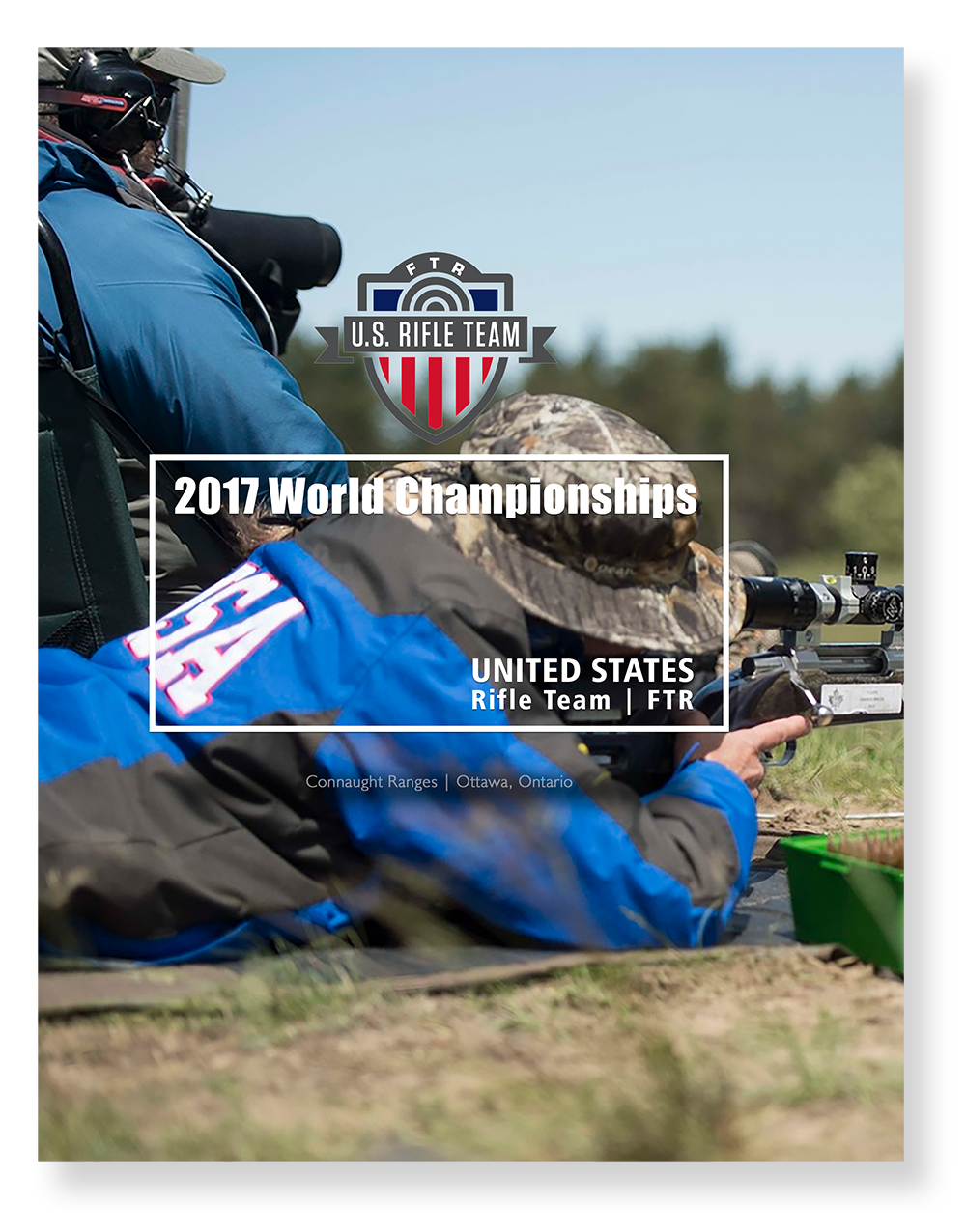
  • Team Program

    Team Program

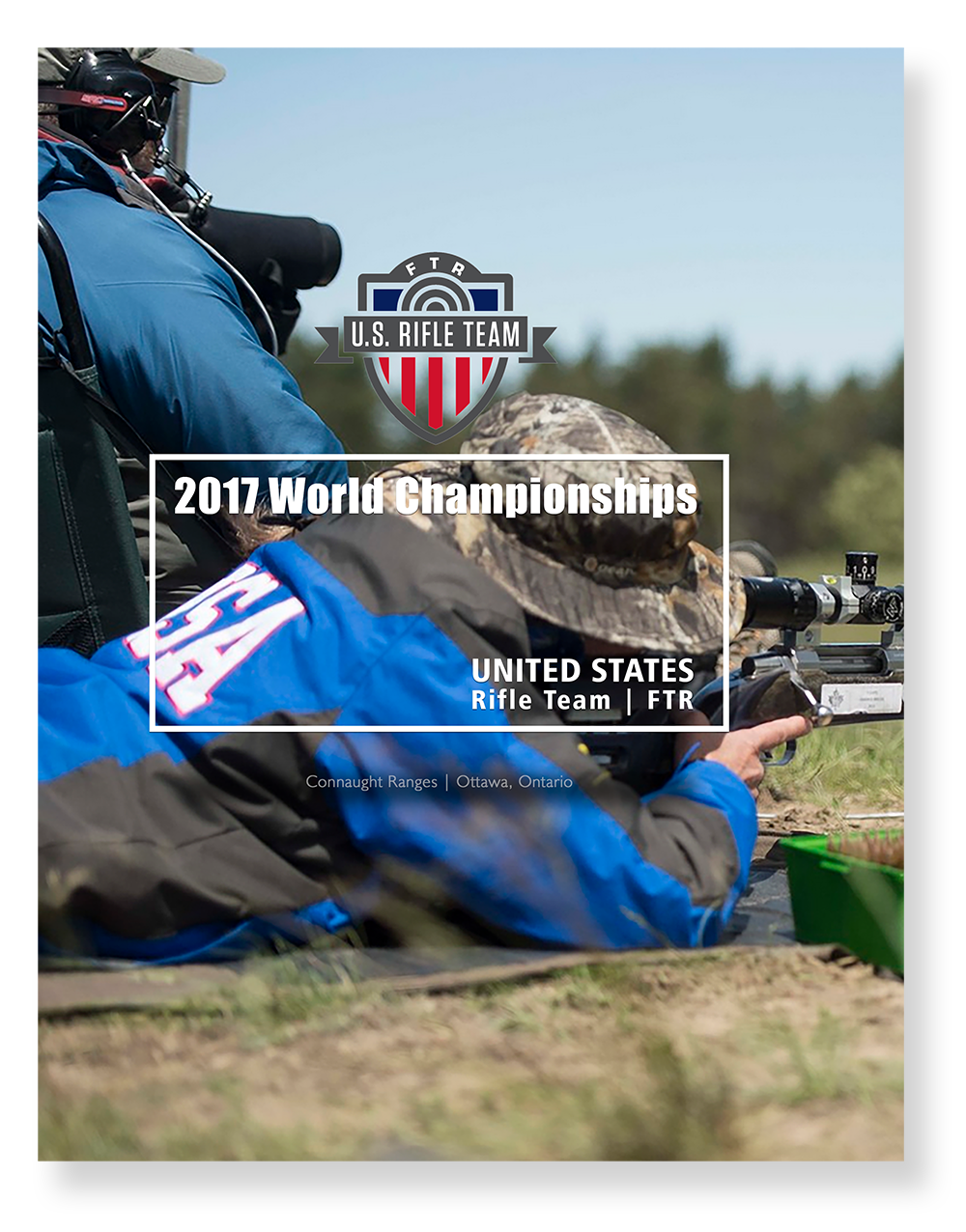
    Thanks to Pam Merillat for all the work she did designing and laying out our team program for the World Championships.  She designed several of the ads and sought out and signed up several advertisers for us. 

    Pam has a gifted eye for design and we have worked with her on numerous projects over the years. In fact, she is responsible for the idea of using a shield type symbol for our team logo.

    We heartily recommend her work and look forward to working with her again in the future.

  • US Rifle Team wins 3rd World Championship

    US Rifle Team wins 3rd World Championship

    More to come when i get time to write it up!

    In the meantime, check out the article at WWW.SSUSA.ORG.

  • Memorial Day

    Memorial Day

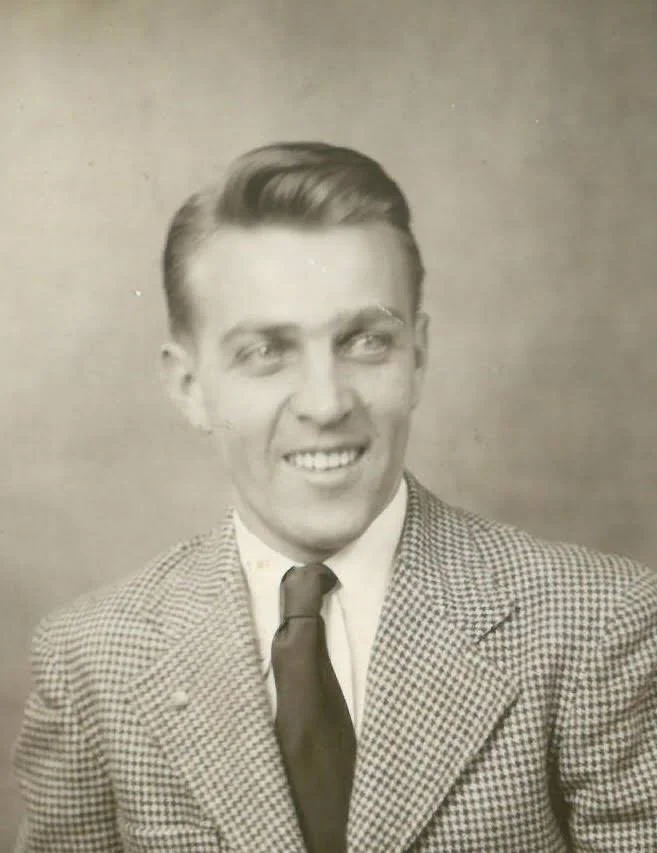
    A little story about my Uncle Alton for Memorial Day.  He passed a few days ago. I got to hear a lot of his stories, but my memories just scratch the surface. He was drafted August 5th 1941, prior to our entry into World War II. His job was being a runner. As a runner he didn’t have to carry much gear and thought it was a great job until the first time he was in battle and he could hear the bullets snapping by his head as he carried messages back and forth. His first piece of advice for me was to never get out of a ditch or hole in the same place that you dived in. He said the Germans would be on aim at that spot waiting for you to climb out.

    He was in the 9th Infantry Division and was among the first units to land in Africa. I only ever heard him voice two complaints about American leadership and the first was about the Kasserine Pass. He said that we knew that our tanks, at the time, were no match for the Germans, but they were sent into battle anyway and nearly all were destroyed.

    Somewhere in Algeria, he got pinned down by machine gun fire. His unit was a few hundred yards below him on the hill side and they couldn’t get to him to save him and he watched them pull out and leave him behind. I heard that story several times, and one of them he mentioned that he only had a few rocks for cover, but that he set to work digging a hole while they were shooting at him. I asked how he was able to do that, but one of my other uncles jumped in with a smart remark about doing it fast and I never got an answer. After nightfall he worked his way through German lines and made it back to the American side.

    He fought in Sicily and at some point his unit got to ride on tanks to the next battle. He hopped up and straddled the main gun and thought it was a good spot until they started moving. Apparently they were on that tank for many hours and he couldn’t move because there were so many guys on it with him. He said he was sore for a long time afterward.

    His unit went into France a few days after D-Day. The hedgerows were much worse than any of the fighting he had been in up to that point. They experienced a lot of casualties there. The Germans, or the “damn krauts” as he called them, would cut the communication lines and then leave a sniper to shoot the guy sent out to repair it. He stopped sending out the new guys because they all got killed. He would go out and repair the lines himself. I never found out how he knew how to avoid the German traps. He told me that he stopped talking to the new guys. He didn’t want to get to know them, because they only lasted a few days.

    His last battle was at or near the Huertgen Forest. His unit had been in constant contact with the enemy for months. He said they never took their boots off because the Germans were constantly counter attacking. It didn’t matter how miserable or wet they were, when the attacks came they had to be able to move to survive.

    He said that fighting in the wooded areas was terrible due to the artillery shells exploding in the trees above. There was no cover to get away from it if they were on patrol.

    After nearly three years of heavy combat, it was his feet (from not taking his boots off) that finally got him pulled and sent home. When he got to a hospital far enough back that they could get his records, the doctor realized how long he had been fighting and asked him what he was still doing there. There was point system that determined when each soldier would get sent home. Uncle Alton kept giving his points away to guys who were married and had kids at home. He stayed in combat long after he had to.

    They sent him to some nice hotel/resort in Florida with all the other long time veterans to rest and recuperate.

    He was an avid hunter before the war, but he sold all his guns when got back and never went hunting again. To meet him on the street you would never know what he did during the war.

    I know these details and stories are probably mixed up as I heard them piece by piece over thirty plus years and I am probably leaving out lots of detail. He was interviewed for a documentary and it is much more riveting than my account.

    http://stream.media.loc.gov/…/afc2001001_071940_mv0001001_6…

    He survived six company commanders, received a Purple Heart and a Bronze star. My uncle was lucky and he admits it several times in the video.  Many were not and I hope everyone takes a few minutes today to reflect on their sacrifice.