Blog

  • The Berger 200.20X

    The Berger 200.20X

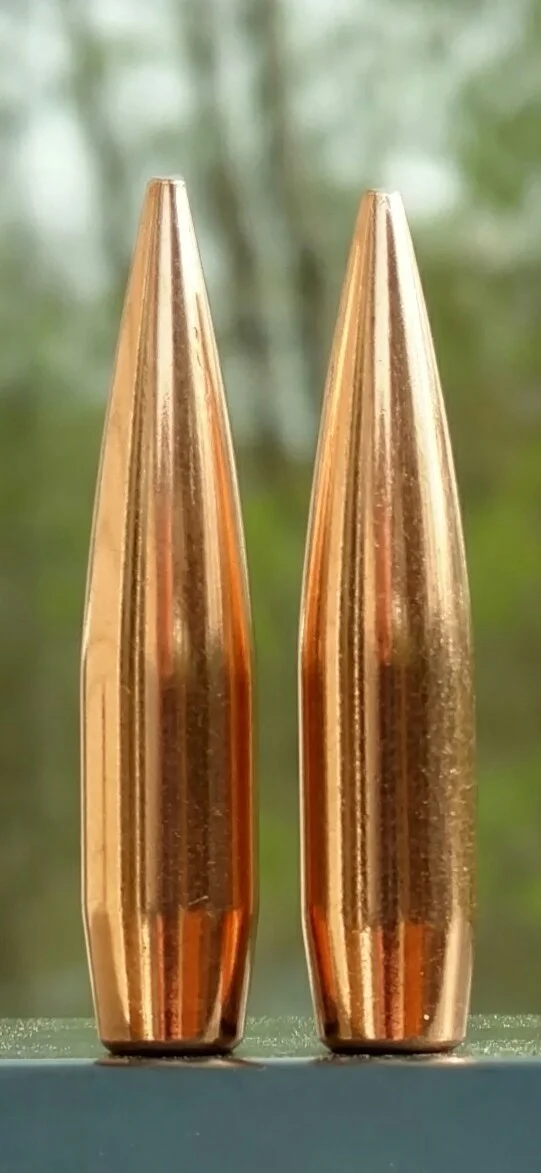
    As a member of the US Rifle Team, I was fortunate to get an early look at Berger’s newest bullet, the 200.20X. The new bullet originated from a conversation between team members John Pierce and Bryan Litz a couple seasons ago. Both Berger and John made prototypes and the Michigan FTR Team experimented with them. The idea is straightforward; put the 215 Hybrid nose and boat tail on a 200 grain bullet. After some magic tweaks at Berger, this resulted in a bullet with a G7 BC of .328 and a reduced bearing surface that still shoots in any rifle that can shoot the Berger 200 Hybrids.

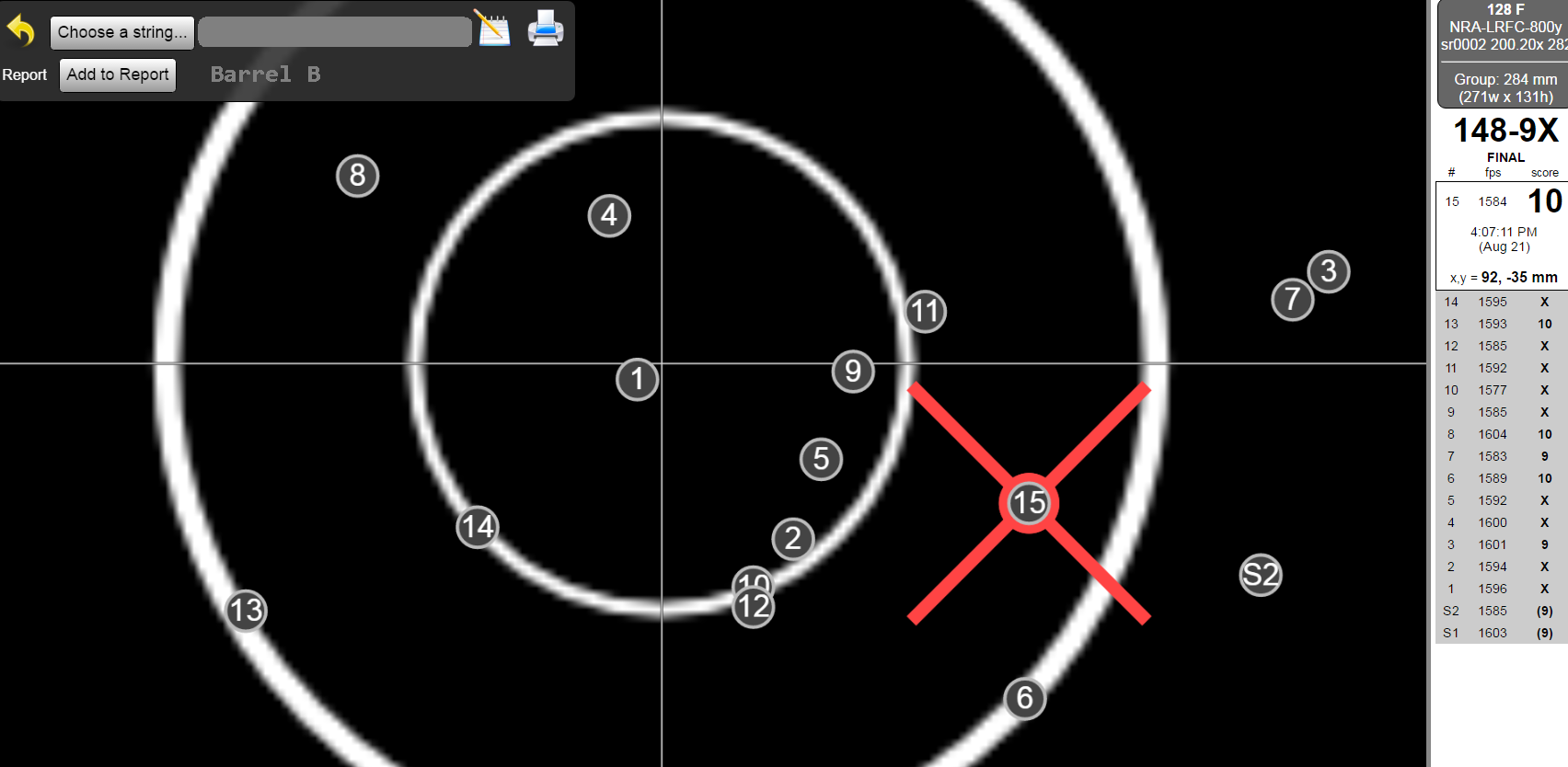
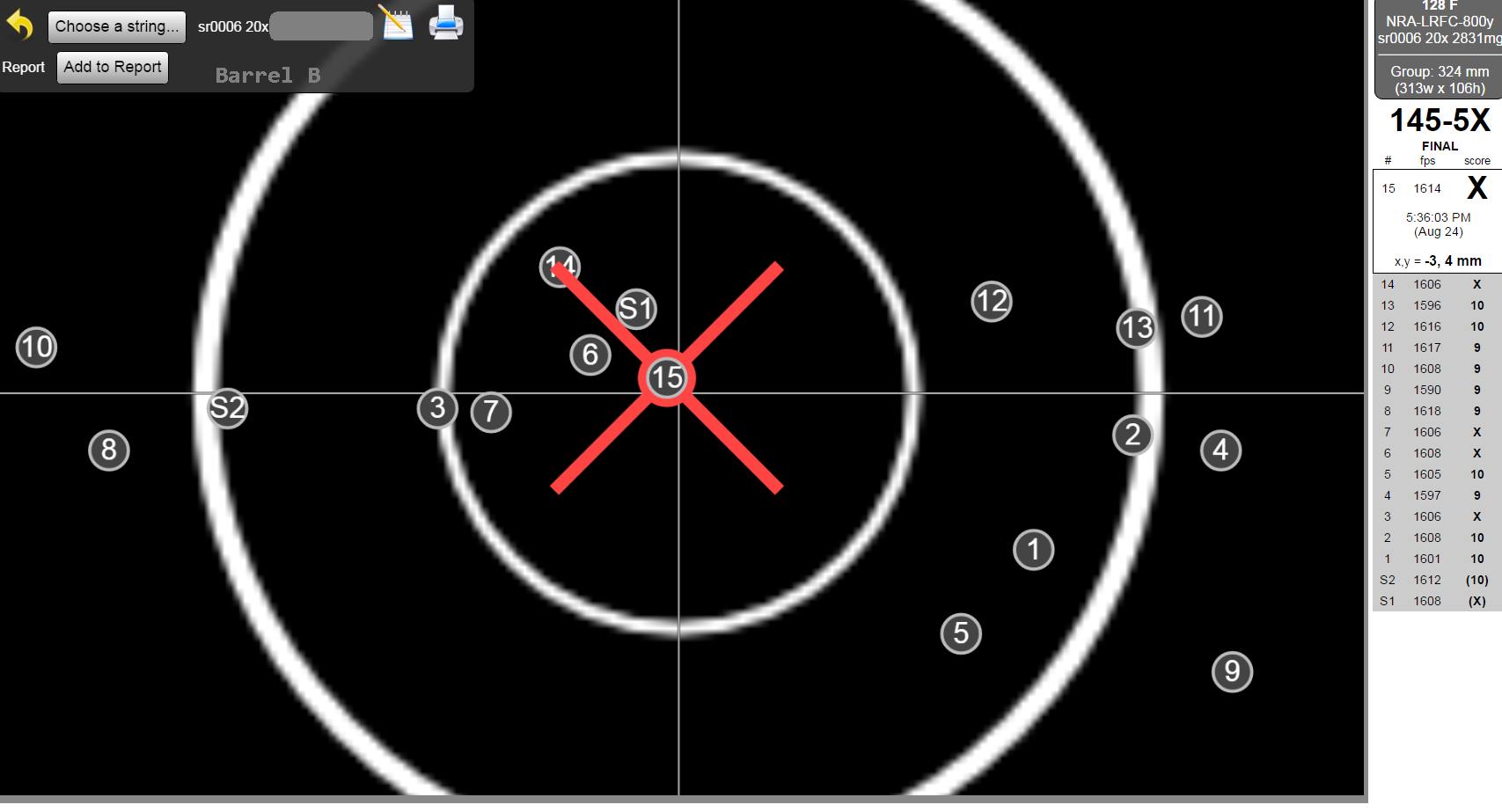
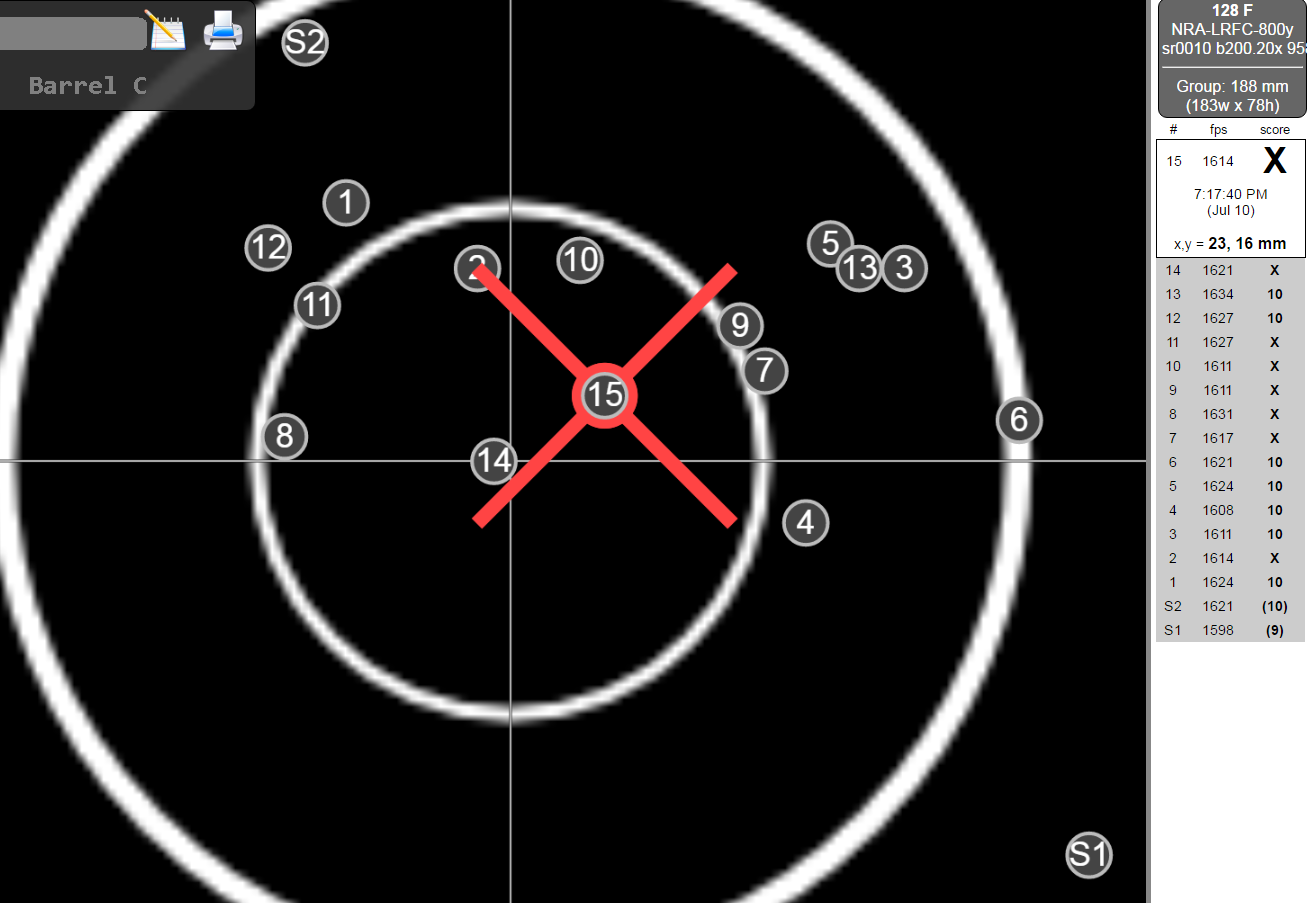
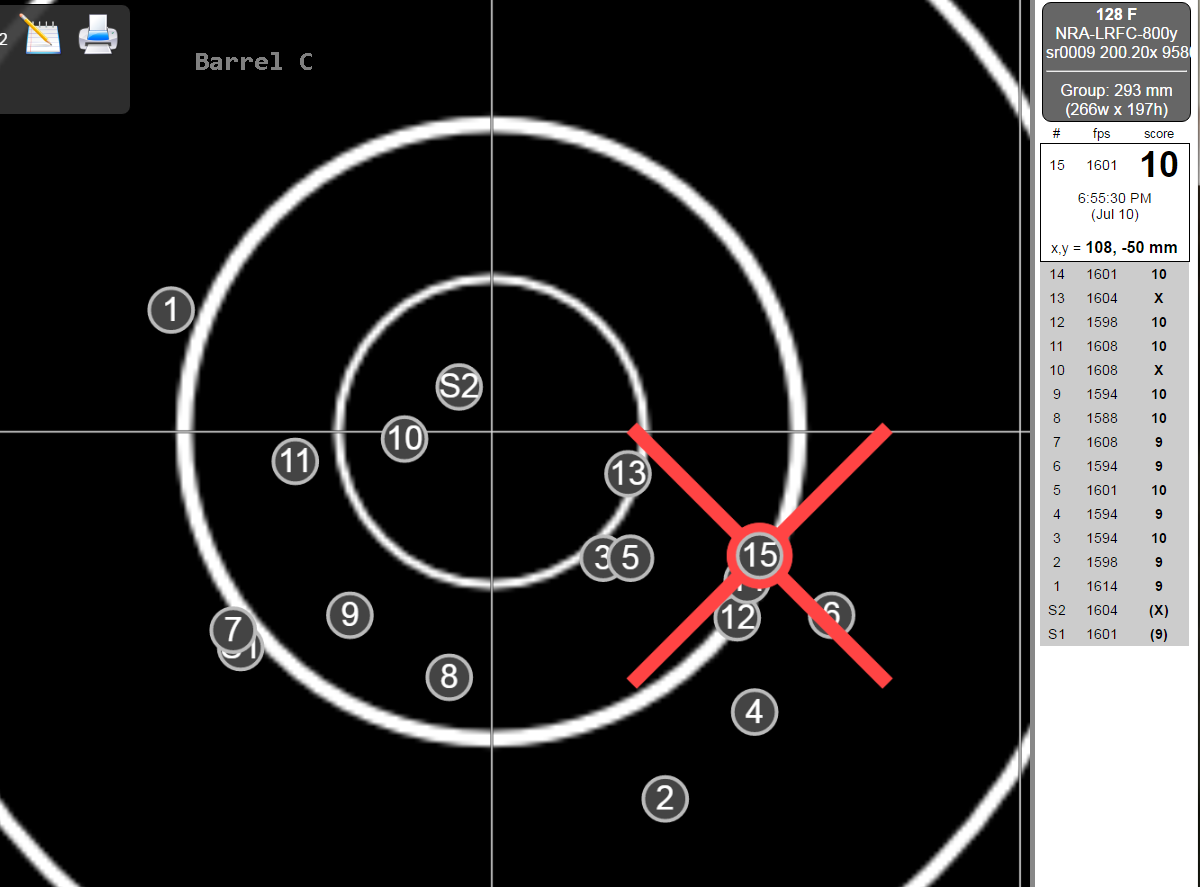
    I have gotten many fine groups out of the Hybrids and can’t yet say that that new 20X will make your groups smaller, but as you will see from the pictures, the new bullets shoot just as well for me with virtually the same loads as the 200 Hybrids. A few groups of the Hybrids are included for comparison.

     Barrel  B with the Berger 200.20x Bullets   (click image to enlarge)
    Barrel  B with the Berger 200.20x Bullets   (click image to enlarge)
     Barrel B again   (click image to enlarge)
    Barrel B again   (click image to enlarge)
     Barrel  C with Berger 200.20x bullets  (click image to enlarge)
    Barrel  C with Berger 200.20x bullets  (click image to enlarge)
     Barrel C again  (click image to enlarge)
    Barrel C again  (click image to enlarge)
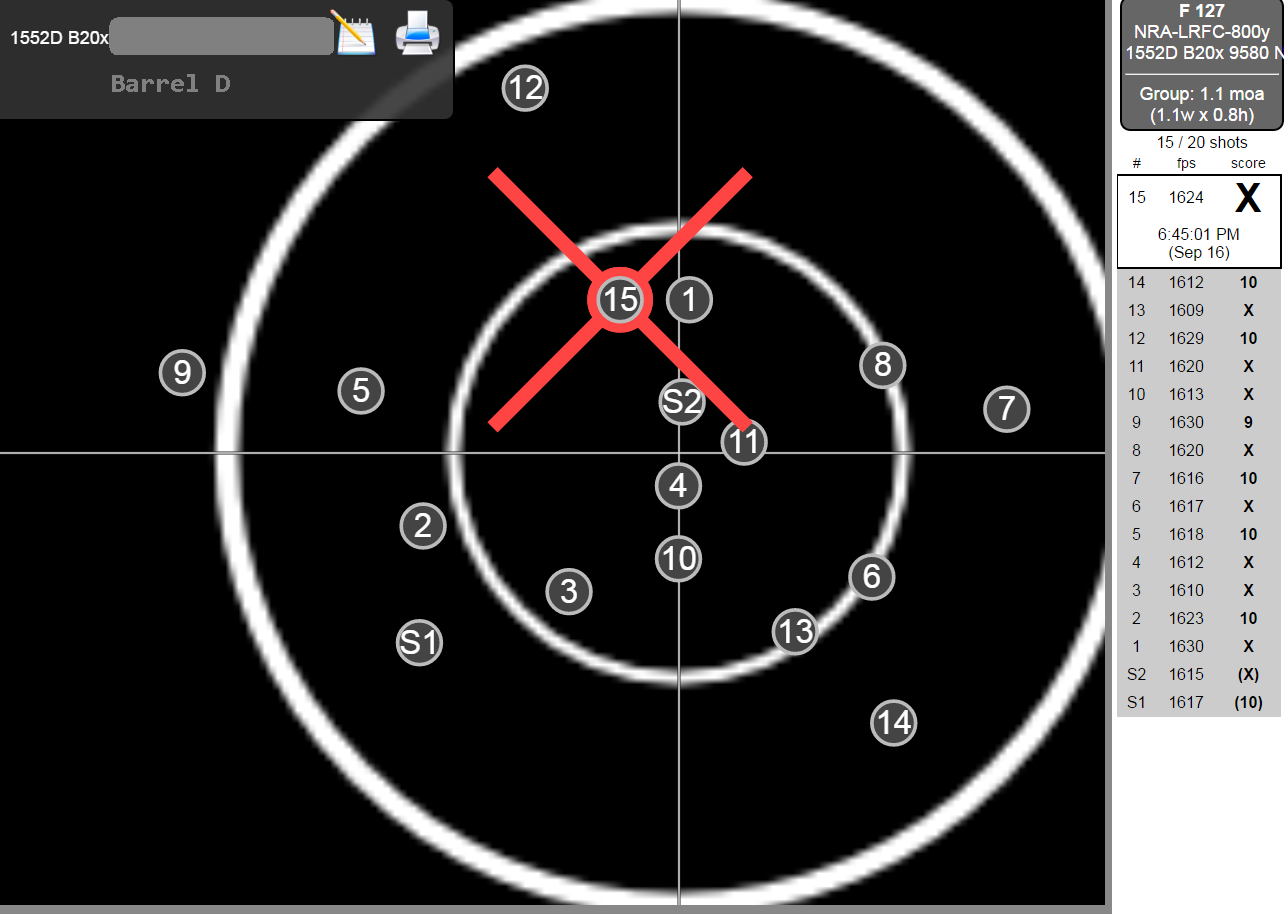
     Barrel D  (click image to enlarge)
    Barrel D  (click image to enlarge)
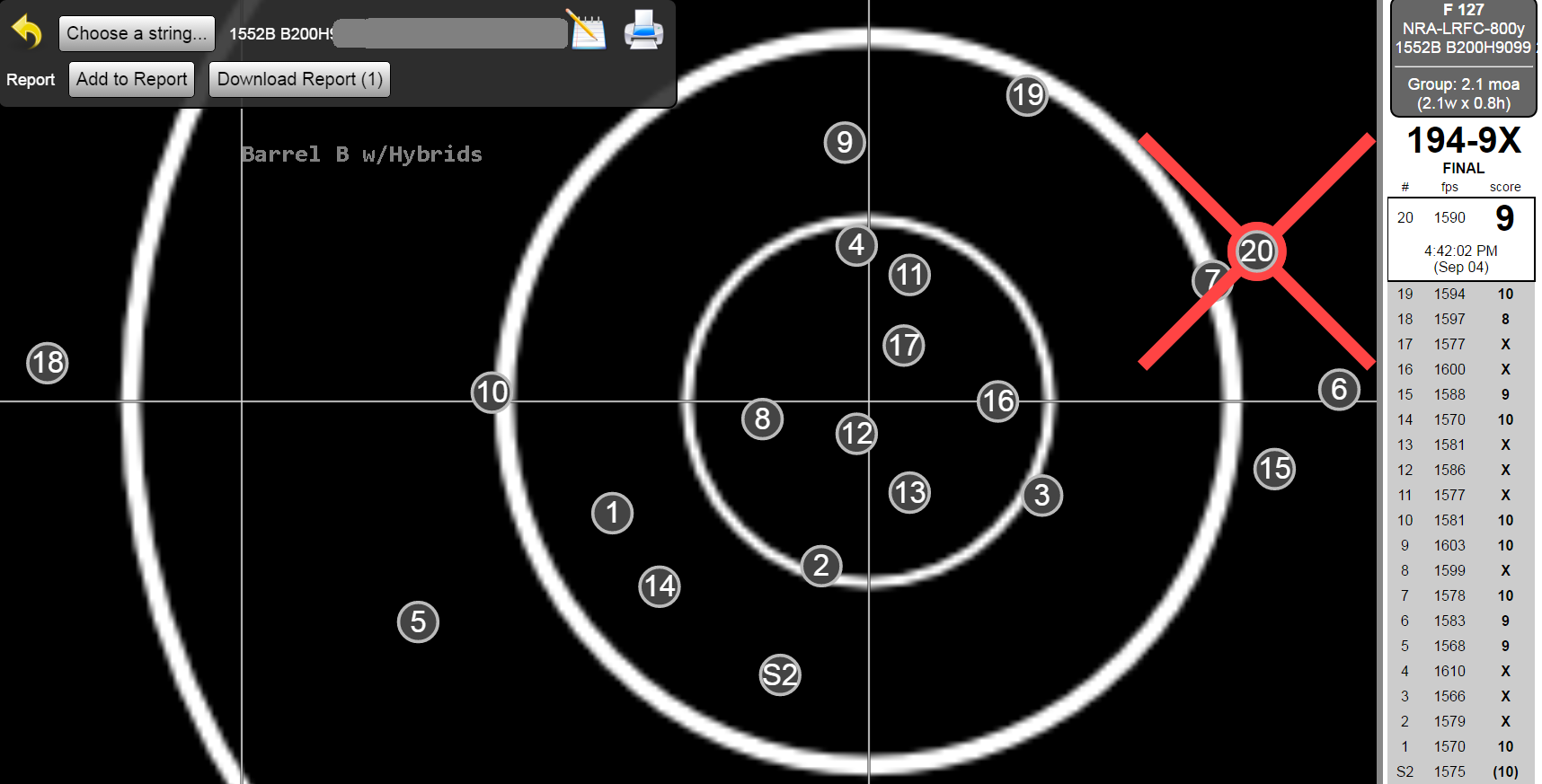
     Berger 200 Hybrids with Barrel B  (click image to enlarge)
    Berger 200 Hybrids with Barrel B  (click image to enlarge)
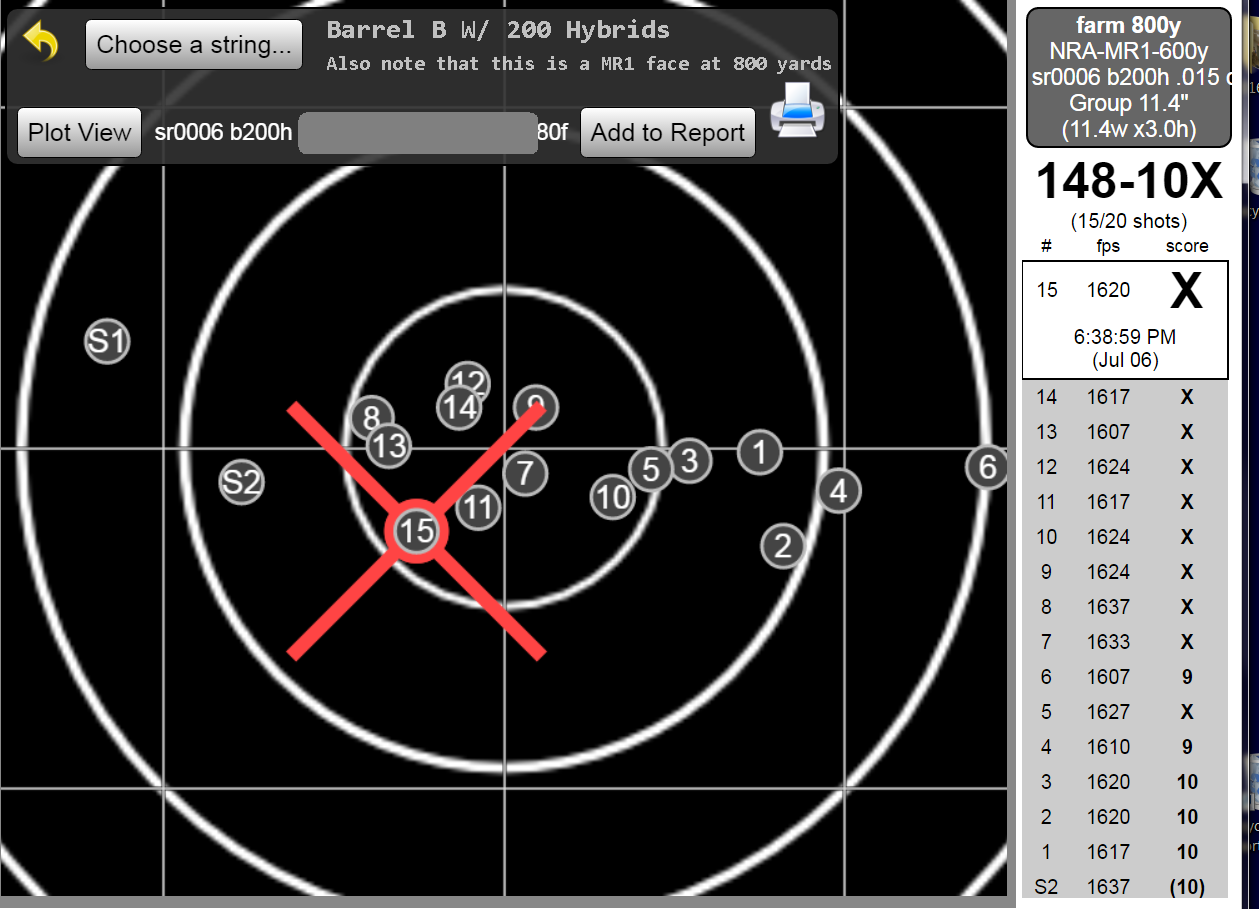
     Berger 200 Hybrids in Barrel B again  (click image to enlarge)
    Berger 200 Hybrids in Barrel B again  (click image to enlarge)

    Some members of our team found it easier to get the 185 Juggernaut shooting well, versus the 200 hybrids. Those members are reporting very good success with the new 200.20x. For me, running the 20X at the same velocity as my good 200 Hybrid loads has proven to be quite successful.

    There does seem to be a noticeable reduction in velocity SD in the three different barrels that I have tested the 200.20x bullets in. I suspect that it is somehow related to the shorter bearing surface. Typically with 200 Hybrids and larger primer Lapua brass, my SD for 15-20 shot strings would be in the 8-12 fps range. With the 200.20x it has been in the 5-10 range.

    The three Bartlein barrels that I used were all 1-11 twist. Two were 4 groove and one was a 5R. All were 28”. And all had different profiles. What they all had in common was a version of the 2013 USFTR reamer. I say version, because I have yet to find two reamers that are alike. A .170” throat works well. I suspect you could vary that .020” either way and not know the difference in groups.

    Bryan has noted that for best BC you want a 1/10 twist and I have seen some concern in the various forums about wat twist rate is needed. As noted, I am using 1/11 twist barrels and all of my testing is at <700’ above sea level.

    Both Vihtavuori N140 and Hodgdon Varget were used in my testing. Both resulted in excellent groups.

    Depending on the gauges you use, you will find that the Cartridge Base to Ogive measurement, when just touching the lands, will be very close to the measurement you get with the Hybrids. However you will need to adjust your seating die out about .030” to get the same jump as at hybrids, depending on the seating die used.

    Our test lot ran out pretty quickly, so we are excited to see that Berger has decided to add this bullet to their product line.

  • Canada Tour 2016

    Canada Tour 2016

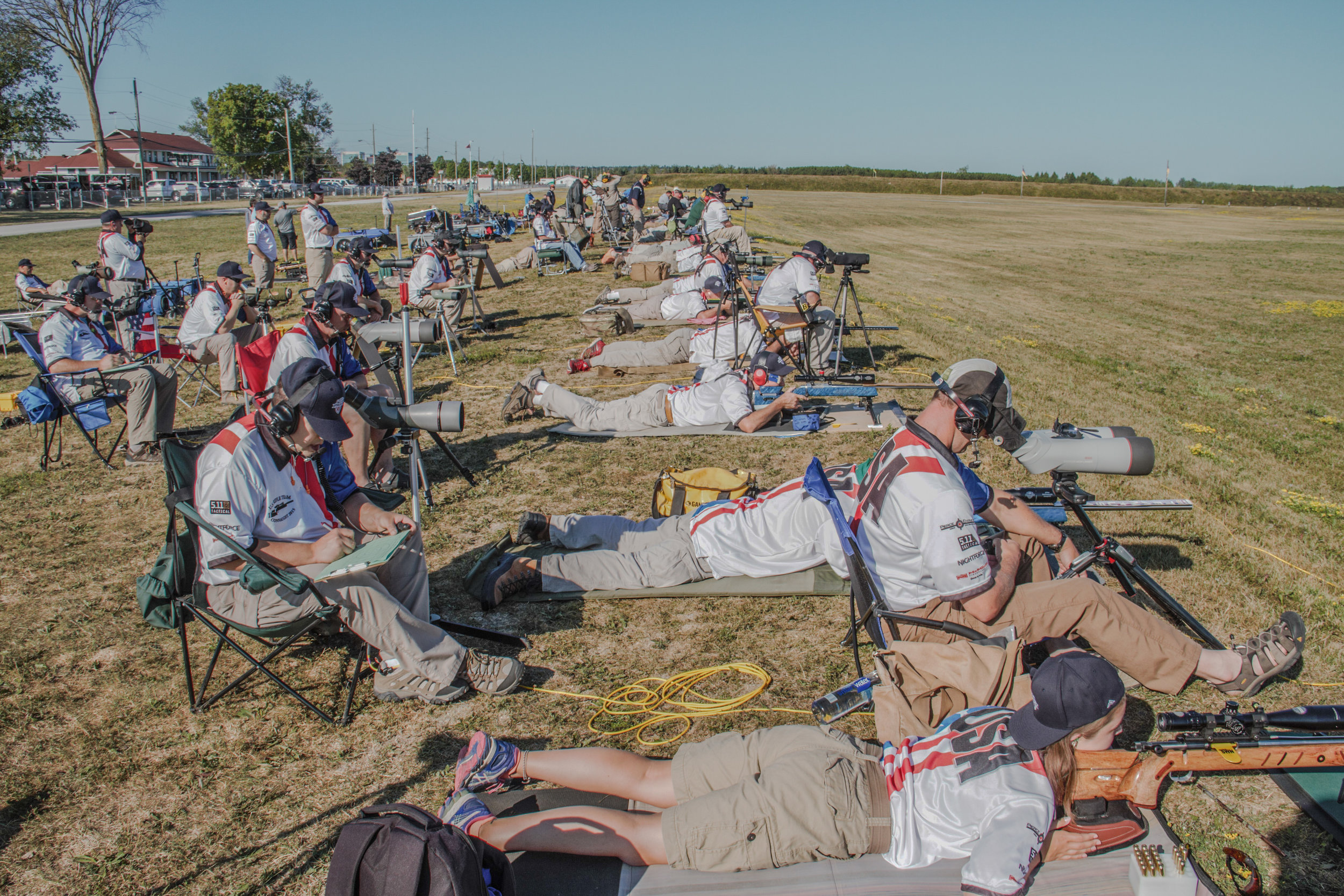
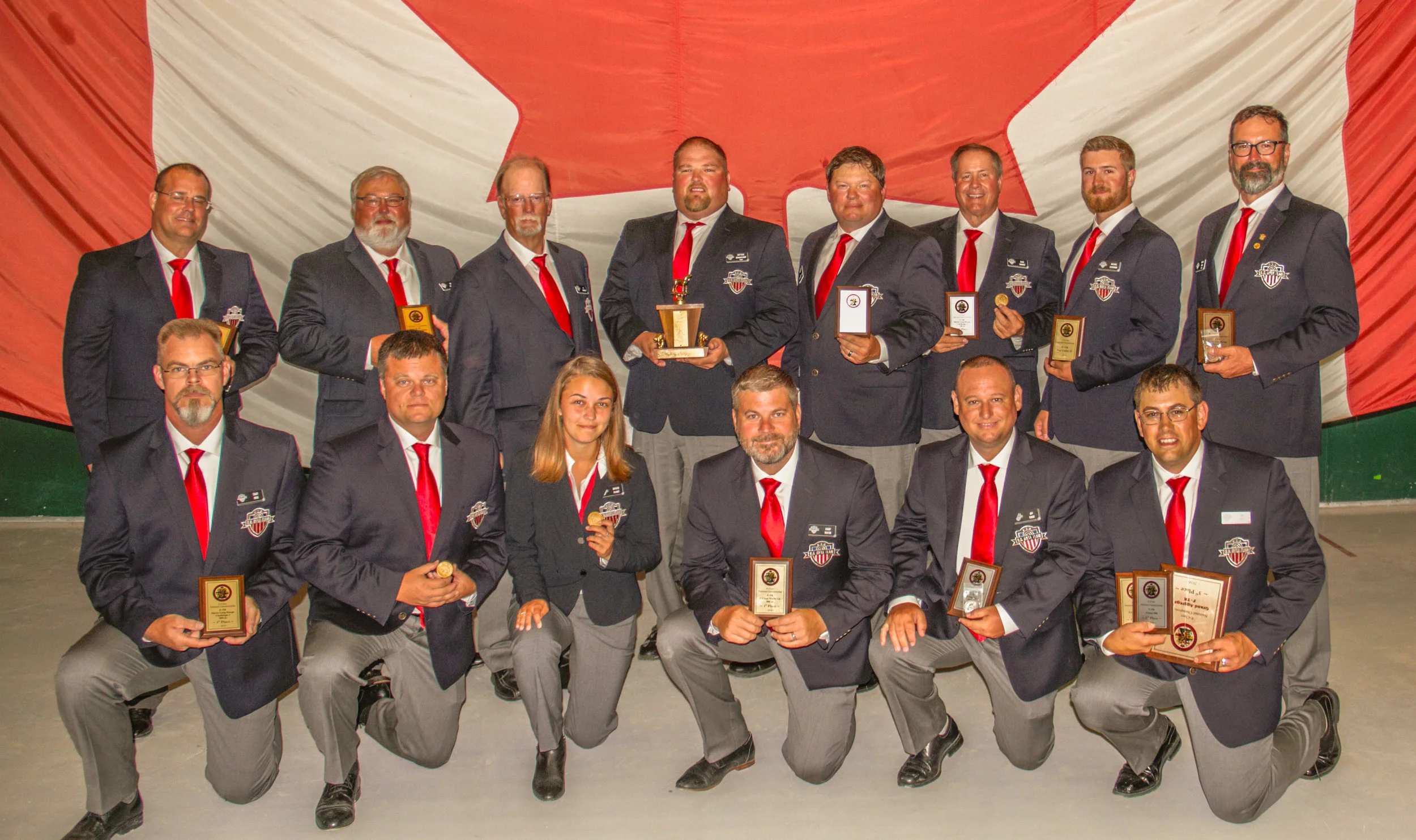
    The team is on the way home from a very challenging week at the Connaught Ranges, near Ottawa, Ontario. The highlight of the week our victory in the America Match on Saturday. The Dominion of Canada Rifle Association matches are some of the best organized in the world. Our hosts, especially Scott Bissett and Kath Corcoran, were very gracious and welcoming as always.

    We spent the first couple days training and then began the DCRA National Matches. After two days of shooting at 700-900 Meters, eleven of our team members finished in the top twenty. Special recognition is due to our Canadian friend, Kevin Chou who won the National Championship by a 17 point margin over our top shooter, Dan Lentz, in third place. Kevin’s brother Will, was his only real competition, finishing only four points lower for the Silver.

    Our own Mitch Fitzpatrick finished as the top U25 competitor. For the Open Rifle team, Shiraz Balolia took home his third Gold from Connaught.

    In the first team event on Friday, we entered one team in the “International Match” to compete against teams from Canada and South Africa. The International is a two squad match with eight shooters per team. On a somewhat inclement day, the South Africans took Gold in a well deserved victory, finishing eight points ahead of us. At the same time the International teams were competing, we entered three teams in the “Lum Match”. The course of fire was the same, the only difference being that the Lum teams are made up of four shooters, rather than eight. The US finished well, taking two of the top three places in the event. Team ‘USA Schwartzkopf’, coached by Matt Schwartzkopf, took top honors by one point over second place team, “’USA Reeve’.

    On Saturday, we competed in the America Match. This would be the first America Match fired under F-class rules to be contested by more than two teams. Again we faced off against the teams from Canada and South Africa. The America Match is an international match fired every two years and hosted alternatively by the Canadians or the Americans. In 2012, it was hosted by South Africans.

    Several other teams also entered the match as ‘Alongside’ teams. In international level matches, only one team per country may enter the official event. However it is common practice to allow alongside teams to compete if there is space available on the range. Both the US Rifle Team and Canadian Rifle Team entered an alongside team and one other private team made up of both Canadians and Americans, entered as well.

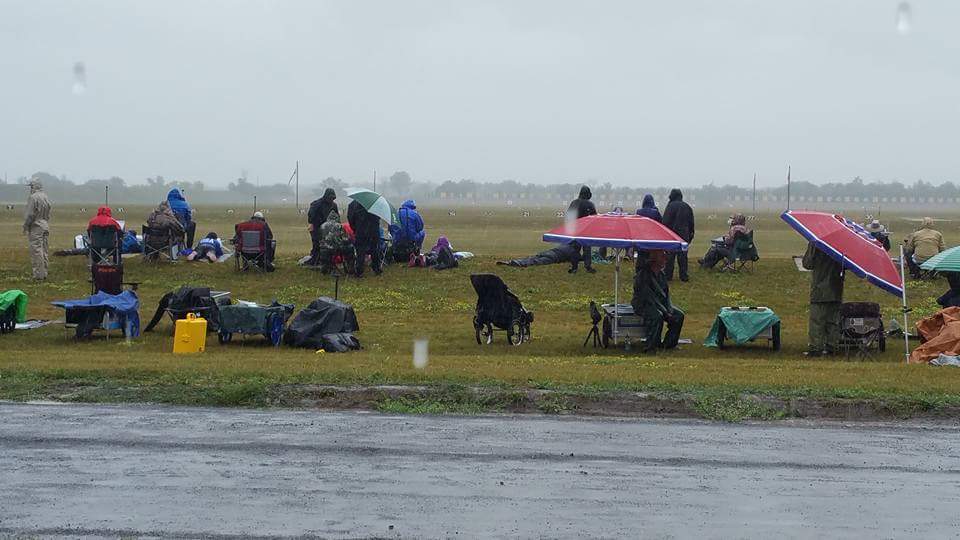
    The forecast was for ¾” of rain with temps in the low sixties and windy all day. Earlier in the week the temperatures had been in the high 90’s (f). The match started off in heavy rains at 500 meters. With all the rain we had some rifle issues that delayed us and finished the stage with only seconds to spare. Due to the weather, the team Captains met and decided to move directly to the 900M line for the next stage. The worry was that due to even worse weather moving our way we would not get the entire match in and it was felt that shortened match should be contested at the longest distance.

    We worked our way back to 900M as the pit crew changed over targets and then proceeded with the second stage. All the teams were experiencing difficulties of one sort or another due to the weather. The target markers had it the worst, trying to keep the soggy targets properly scored while still providing relatively quick target operation.

    As we broke for lunch the captains had more conversations on whether to continue or call the match. Again, we decided to continue. The time limit for the next stage was 80 minutes and the radar showed strong storms would reach us in 60 minutes. That proved quite motivational for all.

    We called the match after the third stage and huddled under our canopies to total the scores for the day. As noted all the teams suffered a few difficulties due to the weather and we left the range not knowing who had won. Several hours later as we assembled for the award ceremony, Mias Nieuwoudt, Adjutant of the SA team, let the cat out of the bag a little by privately congratulating us as we walked in to the Pavilion. We had won the day by a healthy margin.

    As a team, we had managed to perform well in the conditions and as importantly, handle the rifle and target problems that occurred without letting them sidetrack us. All of the teams who finished out the day, deserve high praise for the mental toughness required to shoot and perform well under the conditions and not give up.

    We were lucky to have Kelly McMillan, of McMillan Riflestocks, fly into to town for the latter part of the week to spend time with the team and many of the other foreign competitors attending. Kelly has been a big promoter of the shooting sports throughout his career. His new stocks designed for F-class competition are taking over the sport.

    John Pierce of Pierce Engineering is also a big supporter of the shooting sports and a member of our team. His actions are being used all over the world by top competitive shooters.

    75% of our team is either using Kelly’s stocks or John’s actions and many are using both.

    A special thanks also goes out to Sinclair International and Brownell’s for their support of this year’s tour to Canada. We are all using products from Sinclair because they have what we need to stay competitive at the international level.

  • US Palma Team Tryouts

    US Palma Team Tryouts

    Our sister team, the United States Palma Team has published the tryout process. Those of you who may be interested in trying out, please download the attached and Good Luck!

    CLICK HERE TO DOWNLOAD PDF

  • We love our Phoenix Precision Bipods

    We love our Phoenix Precision Bipods

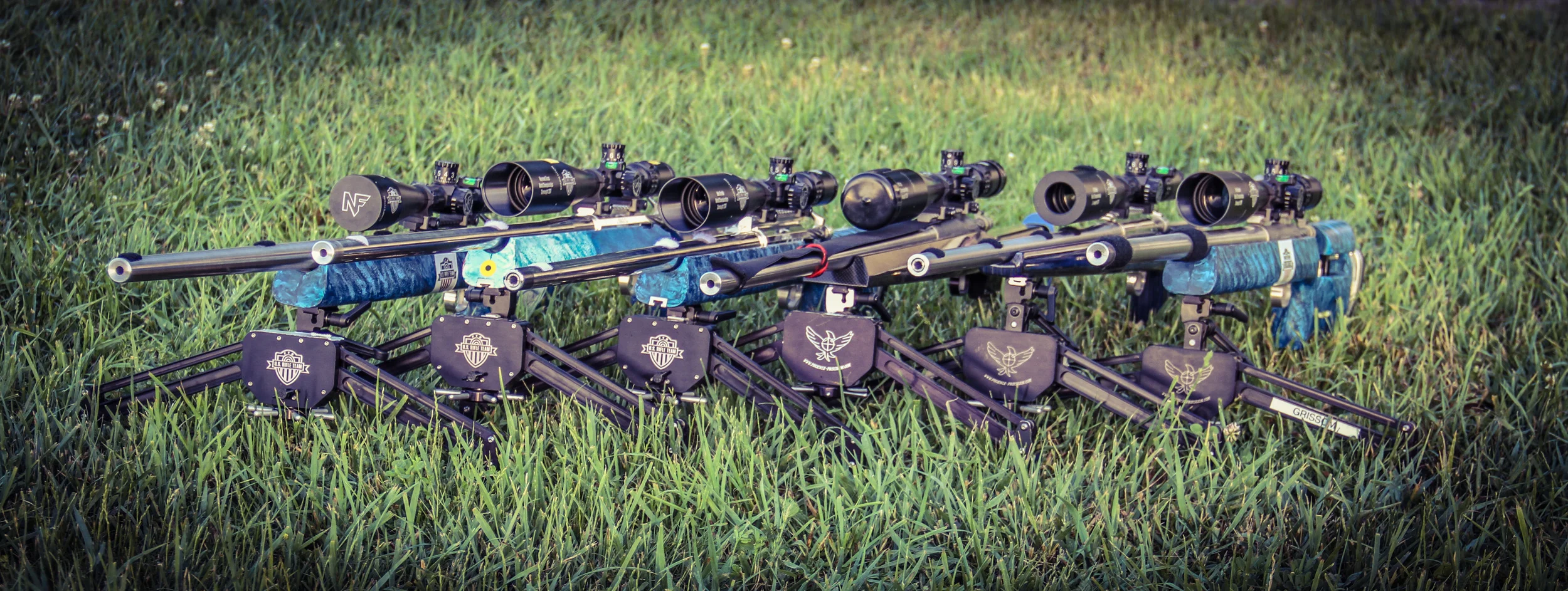
    At our most recent training session, we cataloged the equipment that our team members are using. One of the most prevalent items was the Phoenix Bipod. It is not the only bipod being used by our team, but when 90%+ of the top FTR shooters in the country are using the same thing; that makes a strong statement.

    The Phoenix is a bit heavier than some bipods and the temptation is to get a lighter bipod and a heavier barrel. From the results we are seeing, that may be a poor trade off. What we give up for the extra weight of the Phoenix is more than made up for in the rigidity and smooth precision of adjustment.

    Ease of adjustment is a major consideration. Once you get into position and start your match, the less you have to move, the better. The elevation mechanism on the Phoenix is like butter. It has almost no backlash and will easily hold it’s setting throughout a string of fire. The bipod does include a thumbscrew to lock the elevation adjustment in place, but I have never used it and I’ve never seen anyone else use either.

    Some of our shorter armed shooters have come up with an ingenious method of adjusting the elevation, even though the bipod may be out of reach at the end of their stock forearm. They use a section of hollow arrow shaft as an extension and slip it over a spoke on the mariner wheel to make any fine elevation adjustments needed. This allows them to stay in position and adjust the rifle to the exact point they want, while they continue to view the target through the scope.

    In a conversation with Kelly McMillan some time ago, whose new FTR Stock is also being used by many of our shooters, he mentioned that people often talk about barrel weight and action weight, but then try to get by with a stock that is ill suited because they need to save weight. I confess that I had often thought in those terms. If you step back for a second and consider that in our game, the bipod is also a crucial piece of equipment. It will have a large influence on how well the rifle tracks in recoil. I think Kelly’s wisdom regarding stocks, applies equally to bipods. To put fifteen or twenty shots into a 5” circle at 1000 yards, requires every part of the rifle system to be function consistently and repeatability from one shot to the next. That, I believe, is the secret of the Phoenix Bipod. It allows a greater degree of repeatability.

    To get that kind of performance requires a well-engineered and well-made product and the engineering and quality of manufacture of the Phoenix Bipod are second to none.

  • Paul Phillips on the Mike Avery Outdoor Magazine Radio Show

    Paul Phillips on the Mike Avery Outdoor Magazine Radio Show

    Listen to our Team Adjutant, Paul Phillips, talk about a recent Extra Long Range shoot using Gemtech Silencers and Applied Ballistics.

    Gemtech, a US Rifle Team Gold Medal sponsor, offers the highest quality silencers in the industry. The USRT Is proud and fortunate to have industry leading organizations like Gemtech Silencer as one of our top line sponsors. 

    We wish to extend a special thank you to Greg Latka, part owner of Gemtech, for donating 30 titanium silencers to the team.

    Bryan Litz was on hand to demonstrate his Applied Ballistics company in action. Applied Ballistics is also a Shooter Level US Rifle Team sponsor and Bryan also serves as a coach.

    We stand behind our sponsors and only use quality proven products. Both amazing companies displayed some first round hits on a 9-inch disc at over a mile away (1800 yards).

    The US Rifle Team wants to thank you for your support!!

    Click the play icon below to listen to the interview. Paul’s segment starts at 16:57. You can fast forward/reverse by clicking and dragging on the black bar.

  • Dan Lentz Shares a Few Secrets

    Dan Lentz Shares a Few Secrets

    Dan Lentz has been a top performer since he entered the US program and he recently won the Sinclair East Coast Nationals. We asked Dan if he would share a few tips that have helped him in competition.

    He tells us that “before a match large or small I go over all my gear that I am using to make sure nothing is loose or broken. I always get a 100 yard zero in the week before check grouping and velocity from there I may make a small adjustment to the load . The week leading up to the match the last operation in the loading room is to drop powder and ball. This is where I get to mentally switch gears”.

    Dan goes as many local matches as he can to work on his wind reading skills. He says he usually will shoot very slowly, trying to make that perfect wind call. In some cases he will put zero on the rifle and shoot to see what happens.

    Working on shooting speed is also very important according to Dan. He will shoot rapid five shots groups with the target up at 1000 yards while working to keep his vertical to a minimum. This has really helped him hold tighter vertical, while shooting fast.

    Dan believes that practicing simple fundamentals will produce good results. He says that “rifle handling is important to me. I work very had to be smooth and follow though the shot”.

    Dan will practice about once a month at the very least year around. More in the warmer months. Winnequah Gun club in Lodi Wisconsin is his home range. That is where he does most of his practicing for long range .

    Dan credits Bob Sebold for helping him get started in the sport. Bob is a very accomplished F-Open shooter who also calls the Winnequah club home. Dan says that Bob really took him under his wing and got him pointed in the right direction.

    The Sinclair match was held in unusually tough conditions this year. Dan’s strategy was to literally talk himself through what he was seeing on the range. He was quietly verbalizing to himself every direction shift and speed change that he could detect. The Sinclair match was pair fired, so Dan had to stay on top of the wind and shoot when it was his turn. He said he just had to stay with it and not second guess himself.

    Dan thanks his US Teammate Jeff Rorer of the North State Shooting Club for all the work put into running the Sinclair East Coast Nationals and all of his fellow teammates for their support.

    Dan uses the following products and services: Krieger Barrels, Nightforce Competition Scope, Berger Bullets, Kelbly Panda Action, Piercision Rifles, 5.11 Tactical, Crosstac mat, Holland’s scope level, Applied Ballistics, Sinclair International reloading products, Hodgdon gunpowder, Americase , Lapua brass, Duplin Rifles bipod, Powder scale from Balances.com, Precision Rifle & Tool LLC, Redding Reloading Equipment.

  • Derek Rodgers Wins the 2016 SW Nationals

    Derek Rodgers Wins the 2016 SW Nationals

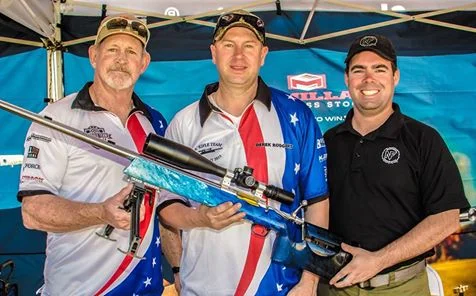
    Big Congratulations to Derek Rodgers for winning the 2016 SW Nationals sponsored by Berger Bullets. The US Rifle Team would also like to recognize Kelly McMillan and Sean Murphy standing on the left and right of Derek in this photo. McMillan Group International and Nightforce Optics are Gold Medal Sponsors and played a huge part with Derek winning the SW Nationals. Derek Rodgers was also using Berger Bullets. Being displayed is Derek’s new McMillan FTR stock.

  • US Rifle Team Raffle

    US Rifle Team Raffle

    Congratulations to Darin Key of Wisconsin, he is the big winner tonight.  The entire prize pot was worth nearly $10,000.

     Dan Lentz congratulating the winner, Darin Key.
    Dan Lentz congratulating the winner, Darin Key.

    Team member Dan Lentz, who works for Krieger Barrels, sold the winning ticket.

    This raffle was a huge fundraising success for the team. We sold over 5400 tickets. None of that would have been possible with out the hard work of our team members and the sponsors who contributed to the raffle. 

    Our biggest ticket seller was team member Robby Burton of Virginia, with 512 tickets sold!

    Special thanks goes out to Ian Kelbly at Kelbly Rifles, Sean Murphy at Nightforce Optics, Greg Latka at Gemtech, Bryan Litz at Applied Ballistics Munitions and Adam Braverman at Nammo-Lapua USA!

  • Ray’s New Labradar

    Ray’s New Labradar

    Like many people, I instantly wanted a Labradar the very moment that I saw the first mention of its possible existence. Even though my CED chronograph had fallen into disuse, I really wanted this new thing. I put my order in and waited.  The day before Thanksgiving, mine finally arrived.

    After a couple of weeks of playing with it, I have a pretty good handle on the controls and proper set up.  At first, it was a little discouraging.  I was having a hard time getting it to trigger.  Triggering is when it senses a shot has been fired and begins recording tracking data for the bullet flying down range. 

    The Labradar has an oval(ish) cone in which it can sense and track a bullet.  The cone is taller than it is wide.  At 50 meters, it is 6 meters tall and 4 meters wide.
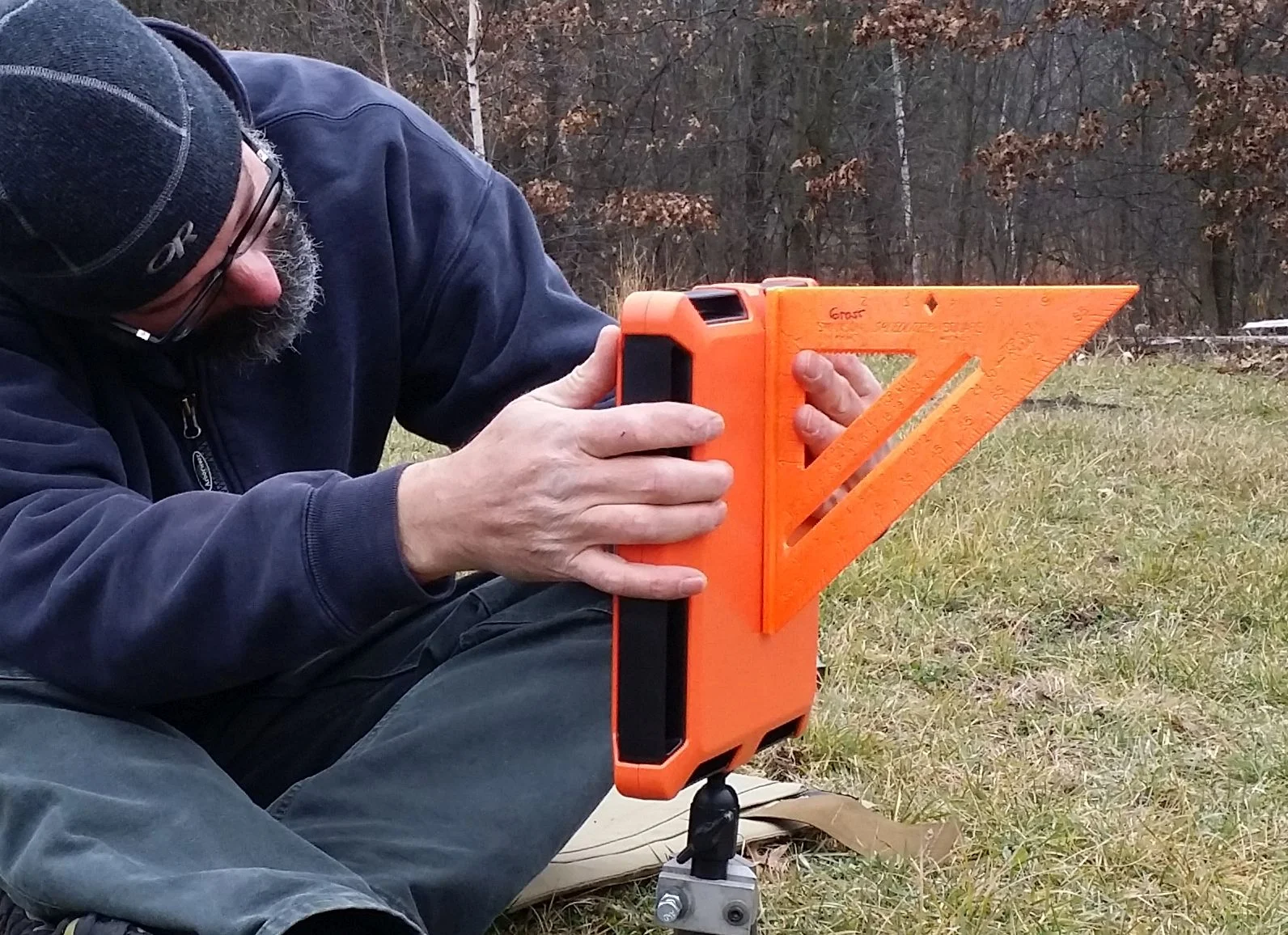
    It requires just as much care to properly aim it at the target, as normal chronograph would.  The problem is, it only has a 1” V-notch in the top of the unit to aim with. After the second time at the range with it, I stopped at Home Depot on the way home and bought a speed square.  I hold the speed square against the face of the unit and sight down the length of the square. Using that little trick, I began to get more positive results. Just make sure the unit is powered off if you are putting your hands on the front of the unit.  Apparently, you should avoid having any part of your body within 8” of the front of the unit when it is armed.

    With a .308, the unit will reliably trigger and track shots with the muzzle within about 15” of the trigger sensor and as much as 5” forward of the unit.  The closer you set it up to the rifle, the sooner the bullet will enter the radar tracking cone.
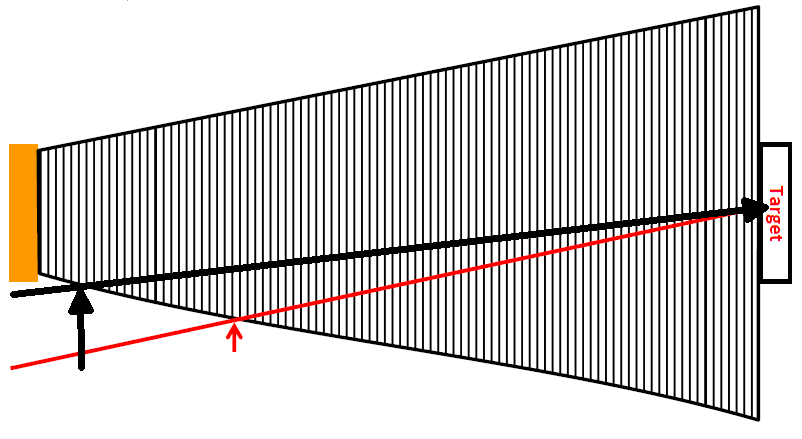
    The first time I took it out, I had it set up 12-15” from the barrel and it did not start tracking my bullets until about 20 yards down range and stopped reading at about 70 yards.  Now I try to set the unit up within about 4” of the barrel and somewhat behind the muzzle.  With that setup, the unit will start tracking my shots about 6-7 yards down range.  The folks at Labradar tell me that it is possible to begin tracking even closer. I have positioned the rifle within an inch of the unit and six yards seems to be the closest reading I can muster. 
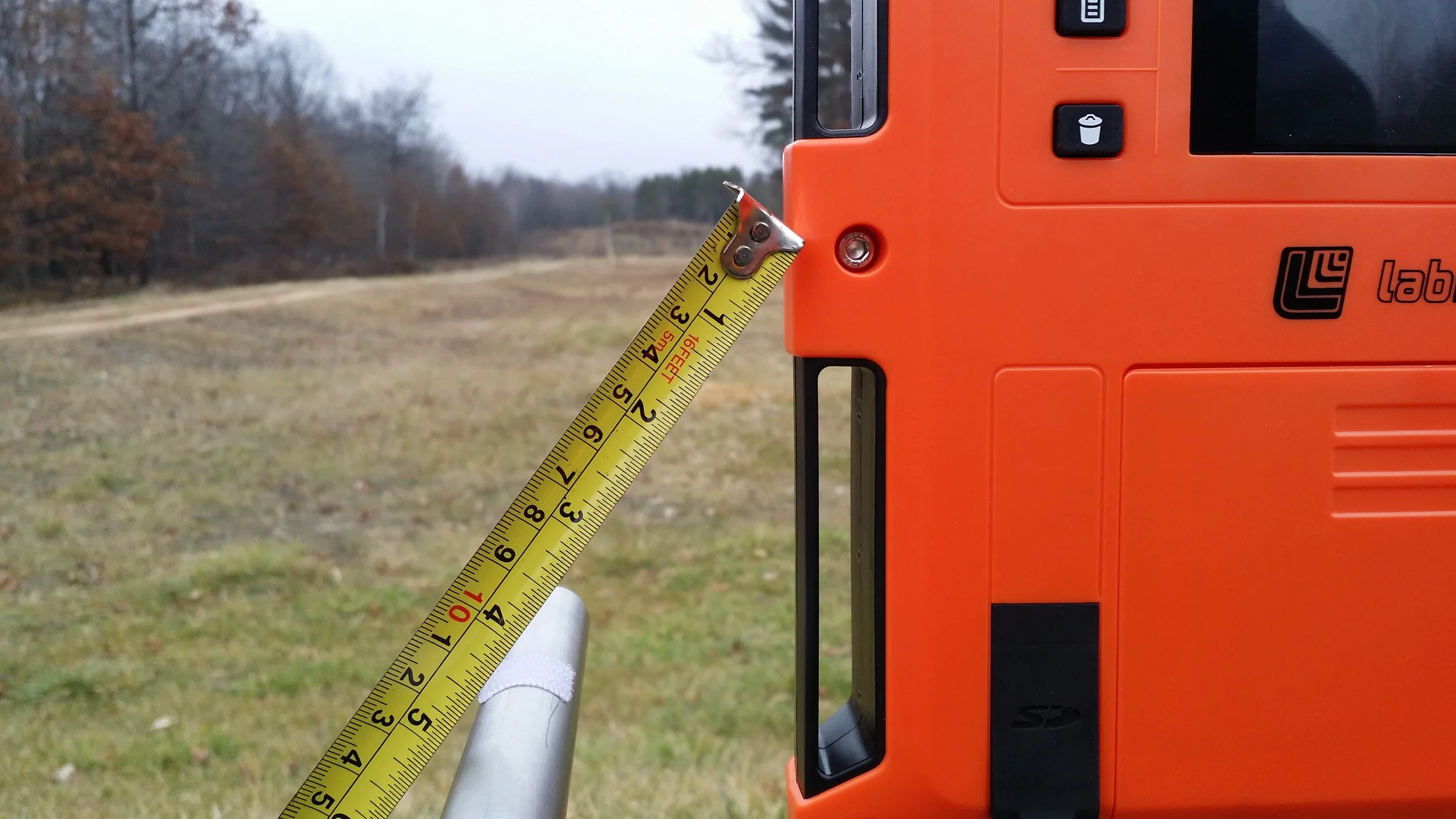
    For a base, I am using an old EKL scope stand with a PanaVise head that allows me to rotate and tilt the unit so that it can be aimed properly.  The weakness in my setup, is that the unit sits a little high in relation to the barrel.  Ideally you want the barrel even with the trigger sensors, which are located at the mid-point on either side of the unit. Labradar sells a base that sets the unit lower.
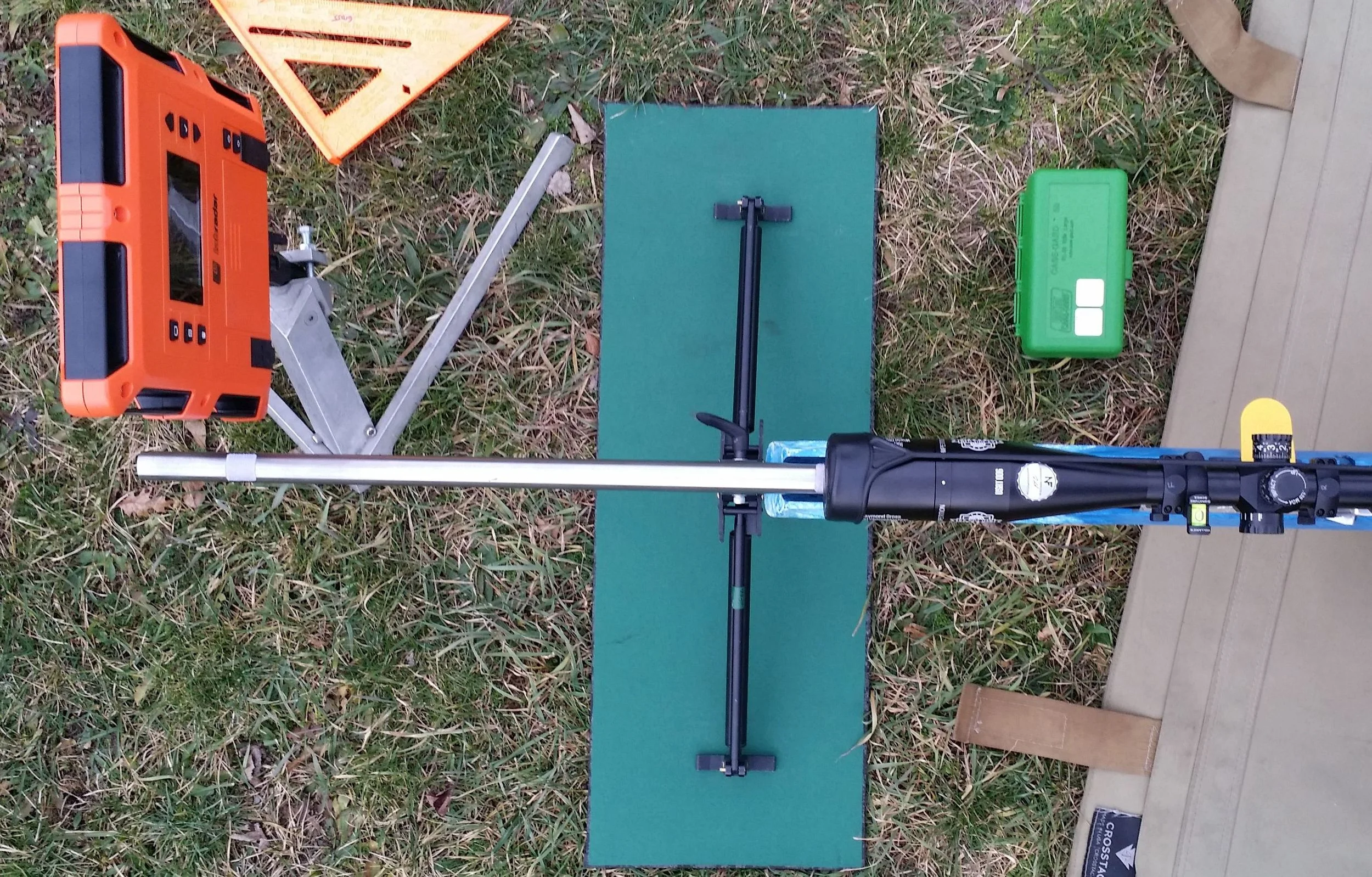
    With a .308, using Berger boat tail bullets, the unit would track about 70 to 85 yards down range.  Most of the testing was done at the Midland County Sportsman’s Club’s 300 yard line. That yard line sits about 3’ off the surrounding ground and virtually all of the tracking info generated there shows that it is tracking .30 boat tail bullets out to about 70 yards.  The 600 yard line sits about 10 feet over the surrounding ground. From that firing point, the unit was tracking out 80 to 85 yards. There may well be other factors involved, but the height of the firing point over the surrounding area seemed to be the only difference to me.

    There are a lot of settings on the unit.  The user manual is well written, but it still took a while to figure everything out.   The main problem I had was navigation from the settings menu to the series menu and back to the ready screen.   I missed it at first, but the ‘Arm’ button is also a ‘mode’ button when it is pressed for a couple seconds.  Learning that made navigating the system much easier.

    For units sold in the USA, there are two radar power settings. I used the unit in both the Standard and Low power setting. It operated fine on both settings and it seemed to read out to the same distance in either setting. The only difference I could see in the two power settings is that Standard setting had a little better Signal to Noise Ratio. You can find that info in the tracking files, which I will discuss below. The low power setting will extend battery life, which is helpful, because it does drain batteries fairly quick.

    I spent some time trying to get it to trigger at lower sensitivities and was unsuccessful.  Even with a .300 RUM, it would only trigger at Level 1. Level 1 is most sensitive, Level 5 is least.  I sent an email to Labradar asking about this and received a response the next day offering a variety of advice.  I continued to correspond over the next few days and am very happy with the company’s willingness to help.

    Before I sat down to write this article I had a conversation with them about the sensitivity issue. I was concerned that it might be a physical problem with my unit.  But it turns out that sensitivity is controlled by the firmware and they are tweaking things and sending out updates as needed. The issue of sensitivity is a challenging problem for their engineers. They are trying to balance many possible situations.  They need the unit to work with a .22LR and with a .300 Win Mag and everything in between.

    I decided to put my unit to the test with two rifles set up in near proximity to see if it would pick up shots from the neighboring rifle.  My .308 was set up normally, close to the unit and a few rounds were fired to make sure it was triggering and tracking.  A friend of mine brought his .300 Remington Ultra Magnum and set up 4’ away from the unit.  His rifle has a muzzle brake making it a worst case scenario to test for a neighbor triggering the unit. At 4’, it triggered every time, but it did not track.  I slightly realigned the unit so that is was directed at a target on the opposite side of his position.  The goal being to move the radar cone across his bullet trajectory to get it to track his shots.  We were unable to get it to track.
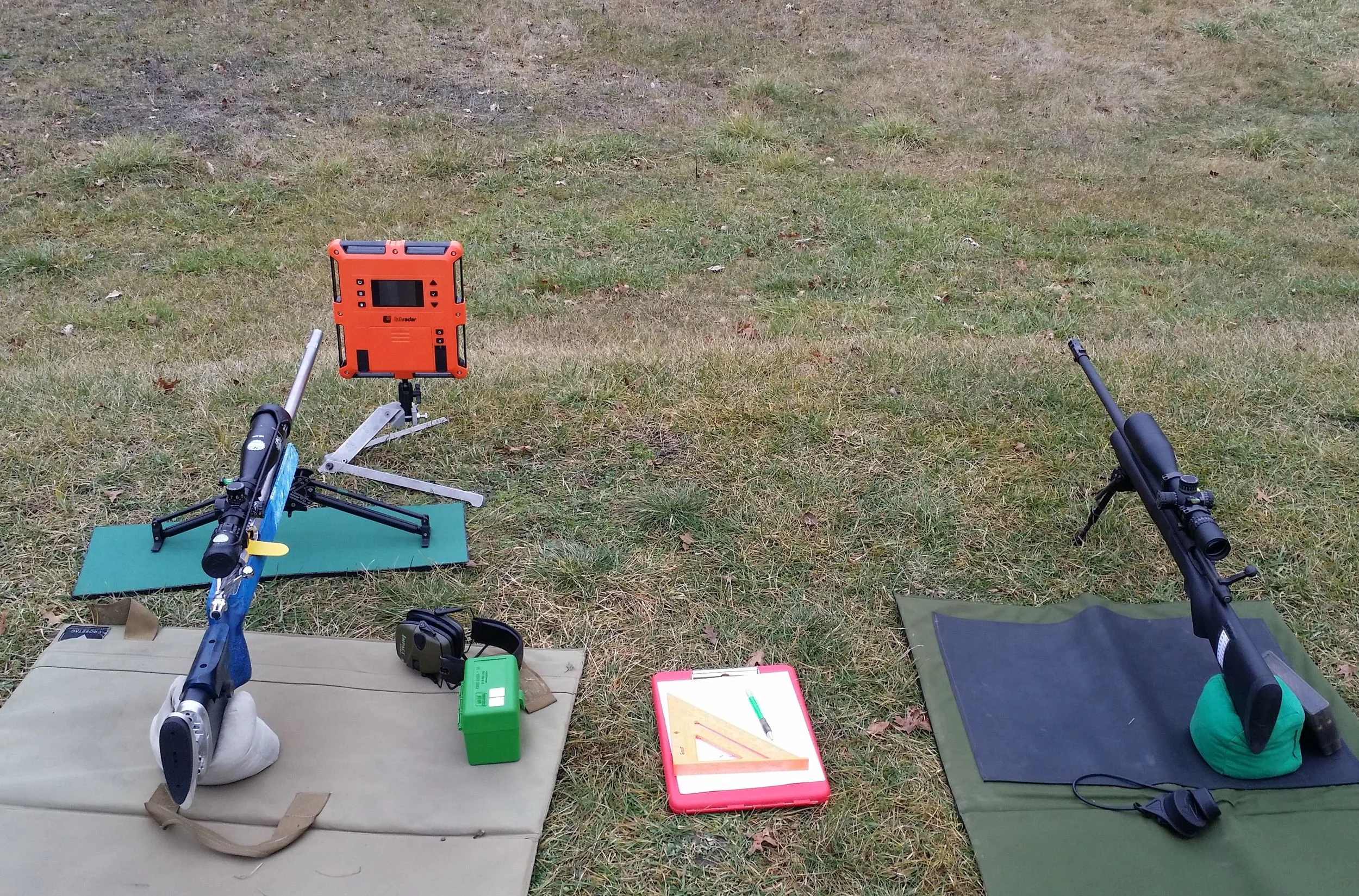
    When I spoke to the Labradar technician about this, he explained that the reason it would not track shots fired that far away from the unit is because the bullets are entering the radar cone at too great of an angle. One of the settings is Projectile Offset.  The choices are 6”, 12” and 18”.  The offset setting allows the unit calculate the angle at which the bullet is entering the radar cone. It needs to know this to accurately calculate both muzzle velocity and downrange velocity. With the rifle firing from 4’ away, it was well outside of the offset range.

    We tried a few more shots with the .300 RUM set 8’ away from the unit.  At that distance, it did not trigger. I have seen a fair amount of concern online about the issue of other shooters on the range interfering with your readings.  From this test, I think it will not be a big problem.  Most ranges have firing points spaced at more than 4’ feet apart with 8’ being typical around here. 
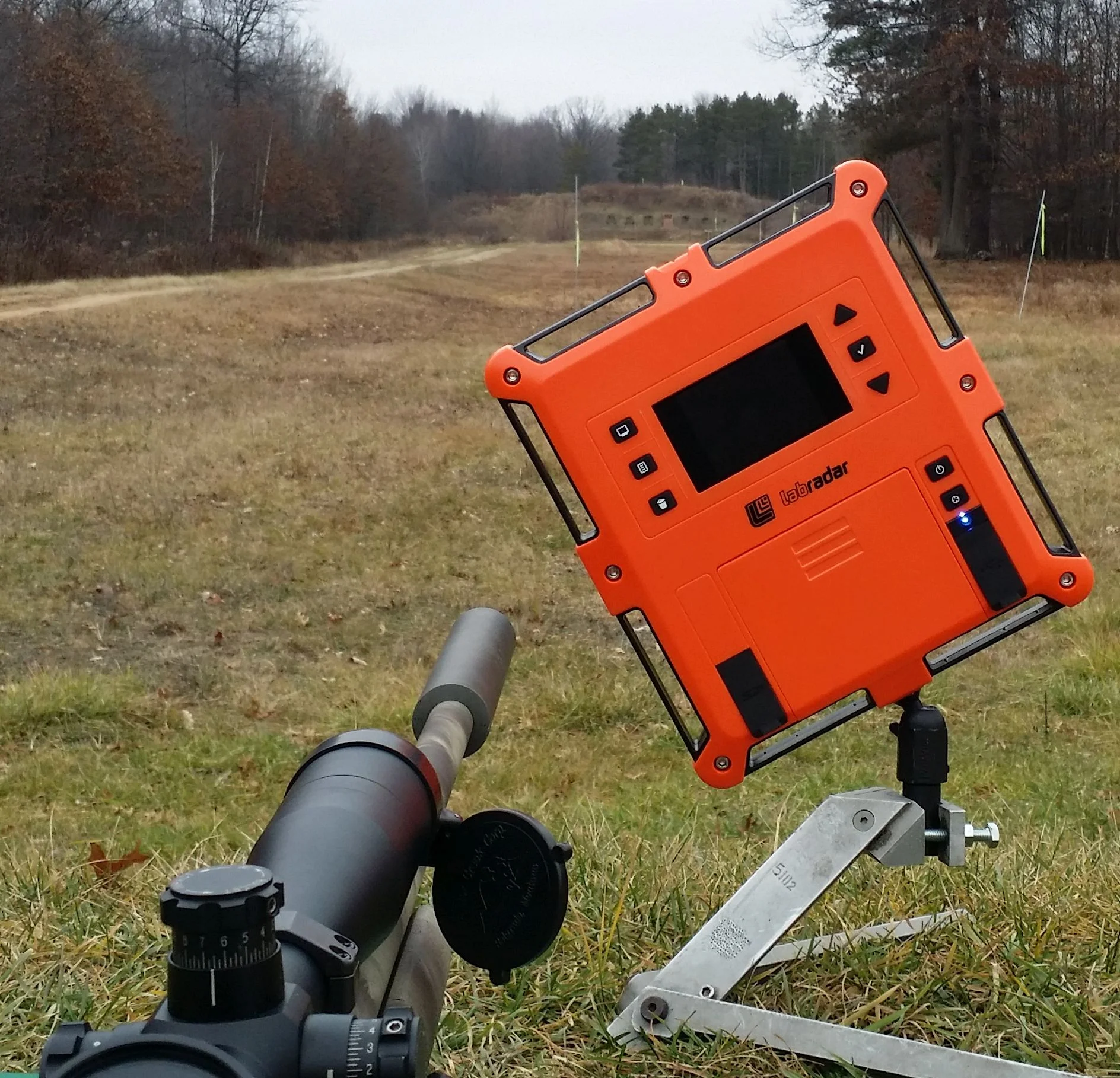
    My friend also brought out a couple Gemtech suppressors. Obviously, they had to be tested.  This proved to be a little challenging.  To start, we shot supersonic .308 loads.  The unit would not trigger at first.  As noted above, my setup sits a little high.  By tilting the unit to the side so the trigger sensor was pointed directly at the suppressor, it did reliably trigger and track.

    We moved to a shorter range and broke out the handguns.  The settings were adjusted into ‘pistol’ mode. .357 Sig proved to reliably trigger the unit.  Unsuppressed .22LR pistols also had no problem triggering the unit, with both subsonic and supersonic ammo. On the other hand, .22 rifles would not trigger the unit unless we fired them 4”-6” behind the unit.  This included both subsonic ammo and CCI Stingers.  The rifle just did not have enough muzzle blast to trigger the unit if the muzzle was not placed behind it.

    The unit had no problem tracking all of the .22 bullets, once we figured out how to get it to trigger.

    The Stingers were also fired though a suppressor and again, if the suppressor was a few inches behind the unit, it would trigger and track the bullets. 
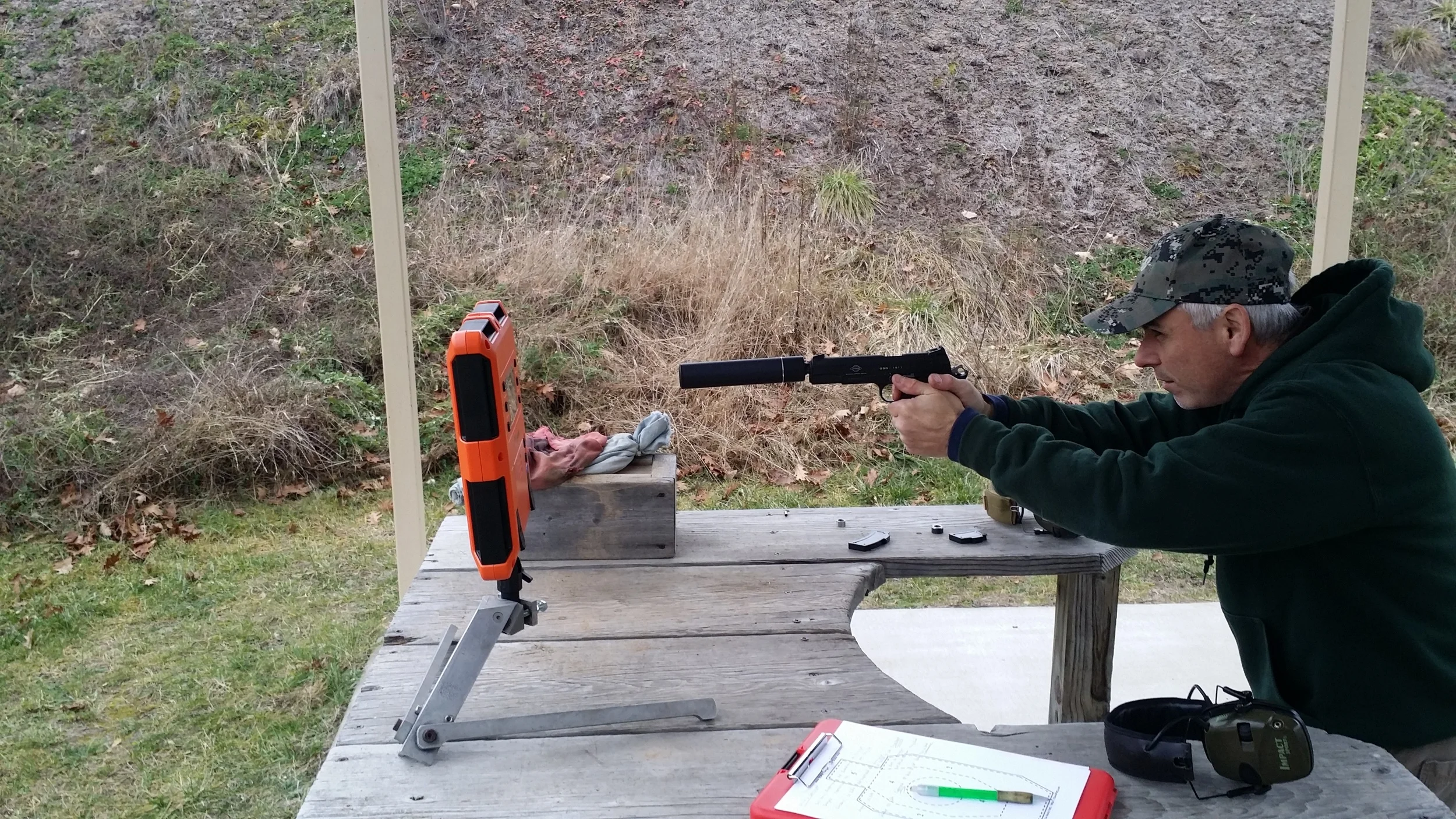
    Subsonic ammo, fired through the suppressor, would not trigger the unit regardless of where it was fired from.

    The Doppler trigger was also tested.  Doppler triggering is intended for archery.  However it seemed to work fine with subsonic, suppressed .22’s. For firearms, the unit is designed for use with the internal acoustic trigger.  The internal trigger lets the unit know a shot happened.  This is important because the bullet will not enter the radar cone for some distance down range.  The Doppler trigger, on the other hand, cannot calculate a muzzle velocity for you.  The unit does not know when you fired or where you fired from.  It only knows that it is getting signal reflected back from the projectile as it enters the radar cone.  When the unit is in Doppler mode, the V0 value is the velocity at the point that the bullet first enters the radar cone. All of the downrange data recorded is measured back to where bullet first entered the radar cone.  This is a key difference.  The data generated when using the normal internal trigger is all measured back to the muzzle.  In Doppler mode, all of the yardline data is measured from where the bullet first enters the cone. The manual also notes that the chronograph data will not be as precise in Doppler mode as it is in normal acoustic trigger mode.  It was interesting to test the Doppler mode, none the less.
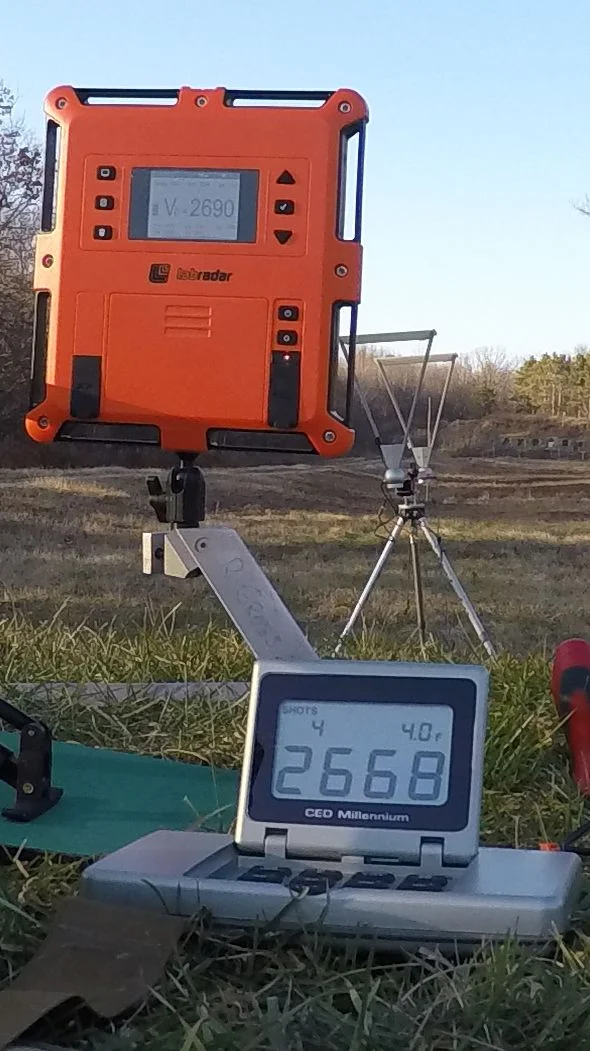
    Somewhere along the way, I set up my CED along with my new Labradar.  The readings were very consistent. Out of ten shots, the Labradar was 22 fps faster for six of the shots, 21 fps faster for three shots and 23 fps faster for one shot. Some, but not all, of that difference is due to the CED screens being 10’ down range.  In the past, I tested my CED against a Magnetospeed and in that case, the Magnetospeed was approximately 30 fps faster, but again the readings were a consistent 30 fps, +/- 2fps difference.

    The unit allows you to scroll through velocity data for each shot using the display and navigation buttons.  When you get home from the range, you can transfer the SD memory card from the unit to your computer and look at all the data that it has collected for you.  You will not need a high capacity SD card.  I found an old 256MB card in my junk drawer and have saved 20 series’, constituting a couple hundred shots and have only used up 5MB of space. 

    For each load or group you wish to test, you create a new ‘series’ with the unit.  The data the unit collects data from every shot you fire, will be entered into that series. When you are ready for the next load, start a new series.

    The main report lists velocities at the muzzle and five additional distances you set.  It also calculates Kinetic Energy at those same six distances and a power factor that you might need if you shoot IPSC or IDPA.
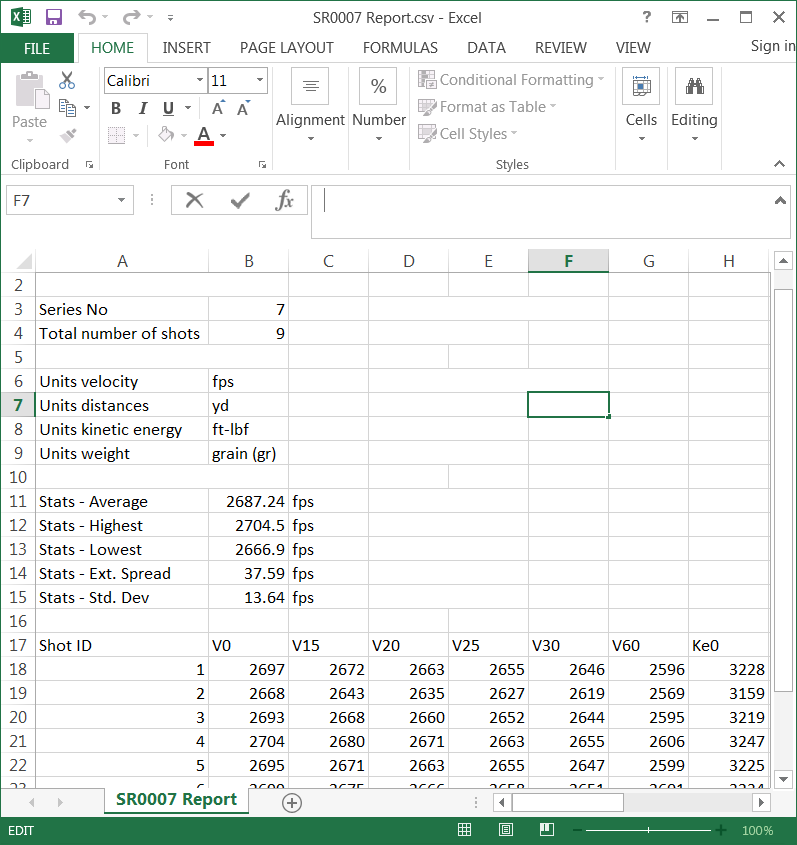
    Even though it is creating a report with velocities for the distances set, it is actually recording a velocity every millisecond while it can register a bullet in its radar cone. It saves all of that info in separate ‘tracking’ files.  The tracking files also record the Signal to Noise Ratio for each reading. (The reading taken every millisecond).

    You will be in nerd heaven when you get home and start picking through all the data. These files are .CSV format and can be opened up in any spreadsheet.

    Now that I have learned how to properly position and aim it to capture all of my shots, it takes me about 3 minutes to set up at the range.  Because there are no downrange screens, I do not have to hold up other shooters on the range like I would when setting up a traditional chronograph.  The convenience alone will mean that I will use it more often than my old chronograph. Every time I take it out, I enjoy it a little bit more.

    (Note that I paid full price for the Labradar and have no sponsorship or financial relationship with the manufacturer).

  • Canadian F-Class National Championships

    Canadian F-Class National Championships

    Follow the link for entry forms.

    http://dcra.ca/fclass.php

    This year the America Match will follow the Canadian Nationals.